Why I Laugh
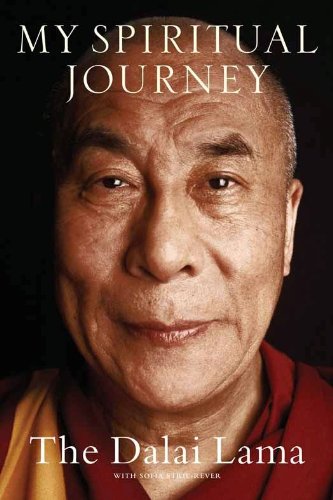
In an excerpt from his new book, My Spiritual Journey, The Dalai Lama shares his belief in the surprising power of laughter and smiles to reach other people, even our enemies.
I Am a Professional Laugher
I have been confronted with many difficulties throughout the course of my life, and my country is going through a critical period. But I laugh often, and my laughter is contagious. When people ask me how I find the strength to laugh now, I reply that I am a professional laugher. Laughing is a characteristic of the Tibetans, who are different in this from the Japanese or the Indians. They are very cheerful, like the Italians, rather than a little reserved, like the Germans or the English.
My cheerfulness also comes from my family. I come from a small village, not a big city, and our way of life is more jovial. We are always amusing ourselves, teasing each other, joking. It’s our habit.
To that is added, as I often say, the responsibility of being realistic. Of course problems are there. But thinking only of the negative aspect doesn’t help to find solutions and it destroys peace of mind. Everything, though, is relative. You can see the positive side of even the worst tragedies if you adopt a holistic perspective. If you take the negative as absolute and definitive, however, you increase your worries and anxiety, whereas by broadening the way you look at a problem you understand what is bad about it, but you accept it. This attitude comes to me, from my practice and from Buddhist philosophy, which help me enormously.
I often say jokingly that a truly selfish person must be altruistic!
Take the loss of our country, for example. We are a stateless people, and we must confront adversity along with many painful circumstances in Tibet itself. Nevertheless, such experiences also bring many benefits.
As for me, I’ve been homeless for half a century. But I have found a large number of new homes throughout the vast world. If I had remained at the Potala, I don’t think I would have had the chance to meet so many personalities, so many heads of state in Asia, Taiwan, the United States, and Europe, popes as well as many famous scientists and economists.
The life of exile is an unfortunate life, but I have always tried to cultivate a happy state of mind, appreciating the opportunities this existence without a settled home, far from all protocol, has offered me. This way I have been able to preserve my inner peace.
I Love the Smile, Unique to Humans
If we are content just to think that compassion, rationality, and patience are good, that is not actually enough to develop these qualities. Difficulties provide the occasion to put them into practice. Who can make such occasions arise? Certainly not our friends, but rather our enemies, for they are the ones who pose the most problems. So that we truly want to progress on the path, we must regard our enemies as our best teachers.
For whoever holds love and compassion in high esteem, the practice of tolerance is essential, and it requires an enemy. We must be grateful to our enemies, then, because they help us best engender a serene mind! Anger and hatred are the real enemies that we must confront and defeat, not the “enemies” who appear from time to time in our lives.
Of course it is natural and right that we all want to have friends. I often say jokingly that a truly selfish person must be altruistic! You have to take care of others, of their well-being, by helping them and serving them, to have even more friends and make more smiles blossom. The result? When you yourself need help, you will find all you need! On the other hand, if you neglect others’ happiness, you will be the loser in the long run. Is friendship born of arguments, anger, jealousy, and unbridled competition? I don’t think so. Only affection produces authentic friends.
In contemporary materialistic society, if you have money and power you have the impression of having a lot of friends. But they aren’t your friends; they are the friends of your money and power. If you lose your wealth and influence you will have trouble finding those people again.
Unfortunately, so long as things are going well, we think we can get along by ourselves. However, as our situation and health decline, we soon realize how wrong we were. That is when we understand who really helps us. To prepare ourselves for such a time, by making true friends who are useful when we need them most, we must cultivate altruism.
As for me, I always want more friends. I love smiles, and my wish is to see more smiles, real smiles, for there are many kinds—sarcastic, artificial, or diplomatic. Some smiles don’t arouse any satisfaction, and some even engender suspicion or fear. An authentic smile, though, arouses an authentic feeling of freshness, and I think the smile belongs only to human beings. If we want those smiles, we must create the reasons that make them appear.
Original article link:
http://www.thedailybeast.com/articles/2010/10/24/dalai-lama-on-laughter-and-compassion.html
Showing posts with label affection. Show all posts
Monday, March 6, 2017
The Dalai Lama on Laughter
Labels:
affection,
altruistic,
buddhist philosophy,
compassion,
Dalai Lama,
friends,
laughter,
my spiritual journey,
potala,
power of laughter,
smiles,
Tibet
Monday, September 28, 2015
Dalai Lama: Interfaith Meeting & Action for Happiness Event
London, England, 21 September 2015 - Before he left for the day’s other engagements this morning, His Holiness the Dalai Lama gave an interview to Christiane Amanpour of CNN. She began by asking: “What are you trying to do here?” and he replied:
“What’s important is that all human beings, wherever they are, whether they are rich or poor, educated or uneducated, have a right to live a happy life. Many think that happiness is to be found outside ourselves in material things, but actually happiness is something that comes from within. So I try to present the importance of inner values not on the basis of religious quotations, but by taking a secular approach based on scientific findings and common sense.
Ms Amanpour remarked that China is changing because of its rapidly developing economy and yet the authorities still refer to His Holiness as a ‘splittist’. He told her that Tibetans had not been seeking independence since 1974 and everybody knows that. She mentioned concern about who will succeed him. He replied that as far as Tibetan Buddhism is concerned the 10,000 monks and nuns who are studying and practising today will be able to preserve it. He made the point that the Buddha’s teaching has survived for 2600 years without there being a recognised reincarnation of the Buddha. He conceded that while he might be the last Dalai Lama, he may yet appoint a successor from among qualified lamas before he goes.
Asked how he sees the persecution of Rohingyas in Burma His Holiness said: “It’s very sad. I have appealed to Burmese Buddhists to stop and think. When they feel angry or resentful of these people, remember the face of the Buddha. I believe that if the Buddha were there, he would offer the Rohingyas his protection.”
Finally, noting that President Xi Jinping will shortly be visiting the USA and the UK, Ms Amanpour wanted to know what His Holiness would say to him if he had the opportunity to do so. He answered:
“Perhaps I’d say that that although historically we were an independent country, as records of the 7th to 9th centuries show, we are not seeking independence now. We can benefit from the development we get as part of the People’s Republic of China, but we must be able to preserve our language, culture and Buddhist traditions. I’d remind him that last year in Paris and Delhi he said that Buddhism plays an important role in Chinese culture. Buddhist values can be of help at a time when the injustice and corruption he seeks to contain are widespread.”
Arriving at the House of Lords to attend an Interfaith Meeting organized by the Buddhist Society, His Holiness was welcomed by Baroness Caroline Cox and Desmond Biddulph, the Society’s President. They escorted him through the grand halls to the meeting, which was attended by Christians, Muslims, Buddhists and Hindus of various denominations and a Sikh.
Baroness Cox amused everyone when she introduced herself as a nurse and social scientist by profession and a Baroness by astonishment. Remarking that she was the first Baroness she’d ever met, she added that she realized that the role gave her a voice to use on behalf of those who have no voice. Desmond Biddulph told the gathering that His Holiness is the Patron of the Buddhist Society and that this was an opportunity to celebrate his 80th birthday and the Society’s 90th anniversary. He said that one of His Holiness’s requests had been that, as Buddhists, members of the Society should reach out to others. He invited His Holiness to address the gathering, which he did.
“It’s a great honour for me to be sitting here with spiritual brothers and sisters of various traditions. In too many places today it seems religious and nationalistic feelings are giving rise to terrible conflicts. We have to find ways to bring peace. This is something that those of us who are religious have to do. Meetings like this are an opportunity to build and nurture friendship and trust among us.
“There is an impression in many people’s minds these days that Muslims are especially militant. However, we have to remember that there are militant Christians, Hindus, Sikhs, Jews and Buddhists too. The Muslim community that lived in Tibet were a very peaceful community and meeting them in exile I am reminded of the pure Lhasa dialect they still speak.
“Muslim friends have told me that if you shed blood you are no longer a genuine Muslim and that Muslims have a commitment to respect all the creatures of Allah. They also tell me that the word ‘jihad’ is misunderstood. It doesn’t have anything to do with fighting other people, but refers to combating disturbing emotions within yourself.”
The Archbishop of York, Dr John Sentamu spoke of growing up in Uganda with two Muslim children from Zanzibar. His father took them in when their own parents died in a fire and he was unable to trace any other relatives. Although theirs was a Christian family, his father arranged for these two children to attend a mosque on Fridays. The Archbishop reported that in a similar spirit he has spoken in the House of Lords of the need to encourage the Chinese authorities to acknowledge and respect His Holiness the Dalai Lama as a spiritual leader. He said he feels it’s important to remember, “I am not my brother’s keeper, I am my brother’s brother.”
Archbishop Kevin McDonald conveyed greetings to His Holiness and members of the gathering from Cardinal Vincent Nichols, leader of the Roman Catholic Church in the United Kingdom. He also recalled serving in the Vatican when Pope John Paul II convened the ground-breaking interfaith gathering in Assisi in 1986 that His Holiness and Archbishop Robert Runcie had attended.
Baroness Berridge, Chair of the All Party Group on International Religious Freedom, who had just returned from the USA, mentioned her concern for persecuted Muslims and Christians in Burma and elsewhere. She said that those in public life have a responsibility to work for rights for all.
Chime Rinpoche took the opportunity simply to say thank you to His Holiness for all he has done.
The Bishop of Coventry, Christopher Cocksworth, remarked that violence is never of any help and that religious leaders need to make this clear their various governments. He pointed out that while there is public horror at the violence in Syria and Iraq, last week saw a great arms show in the UK. He said it seems there is still too great a sense that the use of military force is the way to solve problems, but in fact in the long run words are more effective than bullets. The meeting as a whole expressed dismay at the way violence continues and a determination to work for dialogue.
In his closing remarks, His Holiness repeated what he often says, that love and compassion are what bring people together, while anger and suspicion push them apart. He noted that religious people have their own different paths, each of which is worthy of respect. He said the common purpose of different kinds of food is to fill our stomachs, but it would be foolish to say, “I like to eat this food, therefore you should eat it too!”
He drew attention to three aspects of religious tradition. The religious aspect concerns the common practice of love and compassion, tolerance and self-discipline. While philosophical views may be quite different, they are all dedicated to the same goal of reinforcing the practice of love. However, he said, there may also be cultural aspects of religious tradition, like caste discrimination, that are no longer relevant and should be changed. He said he encourages religious leaders to speak out about these things whenever they can. The meeting adjourned for lunch in the Strangers’ Dining Room of the House of Commons.
In the afternoon, an enthusiastic and friendly audience of more than 2000 awaited His Holiness’s arrival at the Lyceum theatre. He was met at the stage door by his old friend Lord Richard Layard, who with Director of Action for Happiness, Mark Williamson, escorted him to the stage. They were received with resounding cheers and applause. Dr Williams explained that a new course of training was being launched today on World Peace Day, called Exploring What Matters. He said that it is ever more important to bring people together to think about their lives and to help them make their lives happier.
He invited Jasmine Hodge-Lake to the stage to tell her story. She explained that following an accident that left her injured and in pain, she had become depressed. Attending an Action for Happiness talk helped her understand she could relate differently to her pain. She then took the pilot Action for Happiness course that helped her realize how she could bring hope back into her life and help others. She said:
“I learned how helping others you can help yourself. I’m a different person now to the one I was before the Action for Happiness course. I realized I could be the change I wanted to see.”
Adrian Bethune, a teacher at John Stainer Community Primary School told of becoming disillusioned with teaching until he also took the course. It helped him understand how he could do his work more positively and introduce changes in the classroom. He began to discuss with his students how the mind and brain work based on insights from neuroscience. He rebranded an anti-bullying programme as ‘it’s cool to be kind.’ On Fridays he asked the students to think back and choose three good things they’d done that week. He said teacher and students have become much happier about coming to school.
Prof Layard then opened a conversation with His Holiness, who is Action for Happiness’s Patron. He asked him how we can have more happiness, more peace in our hearts and His Holiness replied:
“Peace means no disturbance, no danger. It relates to our mental attitude. If we have a calm mind, obstacles will be less disruptive. The important thing is to realize that ultimately peace of mind is within us, it takes a warm heart and using our intelligence. People sometimes think warm heartedness, compassion and love are religious topics; they are actually factors for our survival. If we don’t take steps to reinforce these qualities now, the 21st century will also end up being an era of violence like the 20th century. We can’t expect change if we don’t take action. Prayer is not sufficient; we have to take responsibility ourselves. Problems created by human beings have to be solved by human beings.”
When Prof Layard asked how we can improve our relations with each other, His Holiness told him that as social animals people have to overcome their old habit of seeing others in terms of ‘us’ and ‘them’, which just solidifies division. He said we have to see that we are all just human beings and that in our globalized world we have to deal with a global economy and problems like climate change whose effects ignore national boundaries. We have instead to cultivate a sense of global responsibility that sees everyone as ‘us’.
His Holiness explained how discussions with scientists over 30 years had contributed to an understanding of a curriculum of secular ethics in education from kindergarten to university. Part of this involves working with a map of emotions to ensure that the physical hygiene we need to be healthy is accompanied by emotional hygiene.
He answered several questions from the audience, observing that the natural seed of compassion we all possess can, if we use our intelligence, be extended to encompass even our enemies. He acknowledged the need to look after our own interests, but explained that the foolish way to do this is to focus on ourselves alone. A wiser sense of self-interest takes others’ interests into account as well. Asked what one thing people could do to make the world a happier place he answered: “Cultivate affection.”
As the discussions came to a close and His Holiness waved goodbye to the audience they responded with affectionate cheers.
Once the curtain had dropped on the stage, the BBC’s Mark Easton asked His Holiness about the launch of Exploring What Matters and Action for Happiness. He suggested that some were cynical that such moves could be effective. His Holiness retorted that such resistance is just old-fashioned thinking. Warm-heartedness can make individuals, families, communities and even countries happier. He said:
“Even the creation of the EU was essentially an act of compassion. And look, I'm convinced more positive reporting by the BBC and the media, just as you are doing now, can really help make people happier.”
original link + ;photos: http://dalailama.com/news/post/1320-interfaith-meeting-and-action-for-happiness-event
“What’s important is that all human beings, wherever they are, whether they are rich or poor, educated or uneducated, have a right to live a happy life. Many think that happiness is to be found outside ourselves in material things, but actually happiness is something that comes from within. So I try to present the importance of inner values not on the basis of religious quotations, but by taking a secular approach based on scientific findings and common sense.
Ms Amanpour remarked that China is changing because of its rapidly developing economy and yet the authorities still refer to His Holiness as a ‘splittist’. He told her that Tibetans had not been seeking independence since 1974 and everybody knows that. She mentioned concern about who will succeed him. He replied that as far as Tibetan Buddhism is concerned the 10,000 monks and nuns who are studying and practising today will be able to preserve it. He made the point that the Buddha’s teaching has survived for 2600 years without there being a recognised reincarnation of the Buddha. He conceded that while he might be the last Dalai Lama, he may yet appoint a successor from among qualified lamas before he goes.
Asked how he sees the persecution of Rohingyas in Burma His Holiness said: “It’s very sad. I have appealed to Burmese Buddhists to stop and think. When they feel angry or resentful of these people, remember the face of the Buddha. I believe that if the Buddha were there, he would offer the Rohingyas his protection.”
Finally, noting that President Xi Jinping will shortly be visiting the USA and the UK, Ms Amanpour wanted to know what His Holiness would say to him if he had the opportunity to do so. He answered:
“Perhaps I’d say that that although historically we were an independent country, as records of the 7th to 9th centuries show, we are not seeking independence now. We can benefit from the development we get as part of the People’s Republic of China, but we must be able to preserve our language, culture and Buddhist traditions. I’d remind him that last year in Paris and Delhi he said that Buddhism plays an important role in Chinese culture. Buddhist values can be of help at a time when the injustice and corruption he seeks to contain are widespread.”
Arriving at the House of Lords to attend an Interfaith Meeting organized by the Buddhist Society, His Holiness was welcomed by Baroness Caroline Cox and Desmond Biddulph, the Society’s President. They escorted him through the grand halls to the meeting, which was attended by Christians, Muslims, Buddhists and Hindus of various denominations and a Sikh.
Baroness Cox amused everyone when she introduced herself as a nurse and social scientist by profession and a Baroness by astonishment. Remarking that she was the first Baroness she’d ever met, she added that she realized that the role gave her a voice to use on behalf of those who have no voice. Desmond Biddulph told the gathering that His Holiness is the Patron of the Buddhist Society and that this was an opportunity to celebrate his 80th birthday and the Society’s 90th anniversary. He said that one of His Holiness’s requests had been that, as Buddhists, members of the Society should reach out to others. He invited His Holiness to address the gathering, which he did.
“It’s a great honour for me to be sitting here with spiritual brothers and sisters of various traditions. In too many places today it seems religious and nationalistic feelings are giving rise to terrible conflicts. We have to find ways to bring peace. This is something that those of us who are religious have to do. Meetings like this are an opportunity to build and nurture friendship and trust among us.
“There is an impression in many people’s minds these days that Muslims are especially militant. However, we have to remember that there are militant Christians, Hindus, Sikhs, Jews and Buddhists too. The Muslim community that lived in Tibet were a very peaceful community and meeting them in exile I am reminded of the pure Lhasa dialect they still speak.
“Muslim friends have told me that if you shed blood you are no longer a genuine Muslim and that Muslims have a commitment to respect all the creatures of Allah. They also tell me that the word ‘jihad’ is misunderstood. It doesn’t have anything to do with fighting other people, but refers to combating disturbing emotions within yourself.”
The Archbishop of York, Dr John Sentamu spoke of growing up in Uganda with two Muslim children from Zanzibar. His father took them in when their own parents died in a fire and he was unable to trace any other relatives. Although theirs was a Christian family, his father arranged for these two children to attend a mosque on Fridays. The Archbishop reported that in a similar spirit he has spoken in the House of Lords of the need to encourage the Chinese authorities to acknowledge and respect His Holiness the Dalai Lama as a spiritual leader. He said he feels it’s important to remember, “I am not my brother’s keeper, I am my brother’s brother.”
Archbishop Kevin McDonald conveyed greetings to His Holiness and members of the gathering from Cardinal Vincent Nichols, leader of the Roman Catholic Church in the United Kingdom. He also recalled serving in the Vatican when Pope John Paul II convened the ground-breaking interfaith gathering in Assisi in 1986 that His Holiness and Archbishop Robert Runcie had attended.
Baroness Berridge, Chair of the All Party Group on International Religious Freedom, who had just returned from the USA, mentioned her concern for persecuted Muslims and Christians in Burma and elsewhere. She said that those in public life have a responsibility to work for rights for all.
Chime Rinpoche took the opportunity simply to say thank you to His Holiness for all he has done.
The Bishop of Coventry, Christopher Cocksworth, remarked that violence is never of any help and that religious leaders need to make this clear their various governments. He pointed out that while there is public horror at the violence in Syria and Iraq, last week saw a great arms show in the UK. He said it seems there is still too great a sense that the use of military force is the way to solve problems, but in fact in the long run words are more effective than bullets. The meeting as a whole expressed dismay at the way violence continues and a determination to work for dialogue.
In his closing remarks, His Holiness repeated what he often says, that love and compassion are what bring people together, while anger and suspicion push them apart. He noted that religious people have their own different paths, each of which is worthy of respect. He said the common purpose of different kinds of food is to fill our stomachs, but it would be foolish to say, “I like to eat this food, therefore you should eat it too!”
He drew attention to three aspects of religious tradition. The religious aspect concerns the common practice of love and compassion, tolerance and self-discipline. While philosophical views may be quite different, they are all dedicated to the same goal of reinforcing the practice of love. However, he said, there may also be cultural aspects of religious tradition, like caste discrimination, that are no longer relevant and should be changed. He said he encourages religious leaders to speak out about these things whenever they can. The meeting adjourned for lunch in the Strangers’ Dining Room of the House of Commons.
In the afternoon, an enthusiastic and friendly audience of more than 2000 awaited His Holiness’s arrival at the Lyceum theatre. He was met at the stage door by his old friend Lord Richard Layard, who with Director of Action for Happiness, Mark Williamson, escorted him to the stage. They were received with resounding cheers and applause. Dr Williams explained that a new course of training was being launched today on World Peace Day, called Exploring What Matters. He said that it is ever more important to bring people together to think about their lives and to help them make their lives happier.
He invited Jasmine Hodge-Lake to the stage to tell her story. She explained that following an accident that left her injured and in pain, she had become depressed. Attending an Action for Happiness talk helped her understand she could relate differently to her pain. She then took the pilot Action for Happiness course that helped her realize how she could bring hope back into her life and help others. She said:
“I learned how helping others you can help yourself. I’m a different person now to the one I was before the Action for Happiness course. I realized I could be the change I wanted to see.”
Adrian Bethune, a teacher at John Stainer Community Primary School told of becoming disillusioned with teaching until he also took the course. It helped him understand how he could do his work more positively and introduce changes in the classroom. He began to discuss with his students how the mind and brain work based on insights from neuroscience. He rebranded an anti-bullying programme as ‘it’s cool to be kind.’ On Fridays he asked the students to think back and choose three good things they’d done that week. He said teacher and students have become much happier about coming to school.
Prof Layard then opened a conversation with His Holiness, who is Action for Happiness’s Patron. He asked him how we can have more happiness, more peace in our hearts and His Holiness replied:
“Peace means no disturbance, no danger. It relates to our mental attitude. If we have a calm mind, obstacles will be less disruptive. The important thing is to realize that ultimately peace of mind is within us, it takes a warm heart and using our intelligence. People sometimes think warm heartedness, compassion and love are religious topics; they are actually factors for our survival. If we don’t take steps to reinforce these qualities now, the 21st century will also end up being an era of violence like the 20th century. We can’t expect change if we don’t take action. Prayer is not sufficient; we have to take responsibility ourselves. Problems created by human beings have to be solved by human beings.”
When Prof Layard asked how we can improve our relations with each other, His Holiness told him that as social animals people have to overcome their old habit of seeing others in terms of ‘us’ and ‘them’, which just solidifies division. He said we have to see that we are all just human beings and that in our globalized world we have to deal with a global economy and problems like climate change whose effects ignore national boundaries. We have instead to cultivate a sense of global responsibility that sees everyone as ‘us’.
His Holiness explained how discussions with scientists over 30 years had contributed to an understanding of a curriculum of secular ethics in education from kindergarten to university. Part of this involves working with a map of emotions to ensure that the physical hygiene we need to be healthy is accompanied by emotional hygiene.
He answered several questions from the audience, observing that the natural seed of compassion we all possess can, if we use our intelligence, be extended to encompass even our enemies. He acknowledged the need to look after our own interests, but explained that the foolish way to do this is to focus on ourselves alone. A wiser sense of self-interest takes others’ interests into account as well. Asked what one thing people could do to make the world a happier place he answered: “Cultivate affection.”
As the discussions came to a close and His Holiness waved goodbye to the audience they responded with affectionate cheers.
Once the curtain had dropped on the stage, the BBC’s Mark Easton asked His Holiness about the launch of Exploring What Matters and Action for Happiness. He suggested that some were cynical that such moves could be effective. His Holiness retorted that such resistance is just old-fashioned thinking. Warm-heartedness can make individuals, families, communities and even countries happier. He said:
“Even the creation of the EU was essentially an act of compassion. And look, I'm convinced more positive reporting by the BBC and the media, just as you are doing now, can really help make people happier.”
original link + ;photos: http://dalailama.com/news/post/1320-interfaith-meeting-and-action-for-happiness-event
Labels:
action for happiness,
affection,
Allah,
bishop of coventry,
buddhists,
burma,
china,
christiane amanpour cnn,
Dalai Lama,
happiness,
hindus,
interfaith,
jews,
Muslims,
sikh,
warm heartedness
Tuesday, June 24, 2014
His Holiness the Dalai Lama Calls on Journalists to Promote Human Values and Religious Harmony
Pomaia, Tuscany, Italy, 12 June 2014 - His Holiness the Dalai Lama started the day with an hour-long interview with Mr. Beppe Severgnini, a journalist, essayist and columnist from the largest selling Italian newspaper Corriere della Sera. Afterwards Dr. Dan Goleman - author, psychologist, and science journalist - interviewed His Holiness the Dalai Lama for his new book. Dr. Goleman was with The New York Times for twelve years specializing in psychology and brain sciences.
His Holiness the Dalai Lama meeting with two Franciscan monks from the Sacred Convent of Assisi who called on him during his visit to Istituto Lama Tzong Khapa (ILTK) in Pomaia, Tuscany, Italy on June 12, 2014. Photo/Tenzin Taklha/OHHDL
In the afternoon, the Rome based Indian Ambassador to Italy Mr. Basant Kumar Gupta called on His Holiness the Dalai Lama. This was followed by a meeting with a delegation from the Sacred Convent of Assisi.
As there was great media interest on His Holiness the Dalai Lama’s visit to Italy, a meeting with members of the press was organized in the afternoon for over 80 journalists at Pomaia.
In his opening address to the press, His Holiness remarked on the surprisingly hot summer weather in Italy, 'Quite hot,' he said. He remarked how he had looked forward to visiting Italy, hoping for cool and pleasant weather, and to escape the hot and humid weather of Mumbai, India, where he gave teachings prior to coming to Italy. But he said the weather in Italy was unfortunately more or less the same as Mumbai.
His Holiness said he was honored and happy to be in Italy. Even though generations have changed since his first visit to Lama Tsong Khapa Institute, the original vision is being carried on. “I feel very good,” he said. He expressed his appreciation to the media for their interest and their presence.
His Holiness spoke about his three commitments in life. He said he always considers himself as one human being out of seven billion. Everyone has the same desire for love, affection and happiness, which is the basis for human love. Therefore he always advocates the promotion of basic human values. His main message is human love – the ultimate source of human happiness. Human affection is basically a biological factor and the basis of our survival is human love. Irrespective of whether we believe in religion or not, whichever culture we belong to, all of us need love.
Speaking on his second commitment, His Holiness stressed the need for religious harmony. He mentioned that he always maintains contact with the practitioners of other faiths and traditions, who carry the same practice of love, compassion, tolerance and forgiveness.
Emphasizing the example of India, where all major religious traditions continue to co-exist peacefully for generations, His Holiness said that he has lived in India for over 50 years and that India is a living example of many different religions co-existing peacefully for over 2000 years and even longer. So, he said, religious harmony is possible.
As a Tibetan, His Holiness said he has always advocated preservation of Tibetan culture and its rich Buddhist knowledge and tradition. He emphasized his present role as just a spiritual leader, having handed over all his political responsibilities to the directly elected political leader in 2011. He said he had done this voluntarily, happily and proudly.
His Holiness emphasized the importance of the role journalists can play in promoting human values and religious harmony. He said that media people should have long noses like that of an elephant to smell in front and behind politicians and other people. In a democratic society people have the right to know the truth and journalists should inform the public of the reality. However, he said they must report truthfully, objectively and in an unbiased manner.
In response to a question on the football World Cup and his favorite team, His Holiness said he wasn’t interested in football. He said that his main interest was overcoming negative emotions and generating positive emotions in his daily life. On a lighter note, he said this was his kind of football, to which everyone applauded.
On a question about Chinese embracing Buddhism on a large scale, His Holiness mentioned that China has the largest population of Buddhists in the world: now over 400 million. He remarked about the genuine interest shown by a growing number of Chinese from mainland China, who come to receive his teachings in India. He mentioned that he had always advocated for genuine autonomy and living with the Chinese. “We are not seeking independence,” he said.
Reflecting on the Kalachakra Initiation in Bodh Gaya, India in 2012 His Holiness spoke about the different reactions from the Chinese authorities towards the Tibetans and the Chinese on their return home after attending the Initiation. He said while the Chinese did not face any problems on their return, the Tibetans were subjected to all kinds of questioning and also house detention. He said next month he was giving the Kalachakra Initiation in Ladakh, India and already the Chinese authorities had imposed strict restrictions, especially on those Tibetans from the Tibet Autonomous Region.
On a question about religious conversion, His Holiness said that it was better and safer to keep one’s own traditional religious values. Changing ones religion is not easy and sometimes it creates more problems. Of course there are some who have natural interest for other religions and it is their freedom to change.
He advised those interested in Buddhism to try to study Buddhist philosophy and to investigate for oneself and practice, rather than follow a teacher blindly. However he emphasized that if you change, you must respect all faiths.
Replying to a query on the best method to deal with the increasing number of refugees in Italy His Holiness acknowledged the problem of the influx of refugees, especially from North Africa and Syria. He said refugees face some problems in their homeland, no refugee comes to another country seeking a holiday. Sympathizing with the difficult situation faced by the refugees, His Holiness said we should provide as much as we can to help. But when we can’t, we should say so.
He said we must pay more attention to the problems in their country of origin such as the economic situation, the ever increasing gap between the rich and poor on a global level and urged nations to help bridge the gap. He called on the richer nations to help poorer countries by providing educational, economic and technical support. He stated that the refugee problem was man-made and that everyone should take moral responsibility for this. He then touched on the concept of 'we' vs. 'they', which he said was outdated and the root of all problems.
He said that his main hope for peace in the world was with the younger generation. He called on the youth to seek ways to create a more peaceful and more compassionate world.
He spoke about the research on inner values that has been carried out by American scientists over the past decade or so. He said, the scientists were now ready with a three week program and will soon start experiments with volunteer students. The participants’ blood pressure and stress levels, etc. will be measured prior to the start of the three week program, looking for changes at the end of the program.
He then touched on secular ethics education. He drew on the example of the great nation of India, whose constitution is based on secularism - respect for all religious traditions including respect for non-believers. In this regard His Holiness spoke about the research carried out to try to develop an academic curriculum in schools, which he preferred to call "hygiene of emotion".
He expressed hope that a draft curriculum for secular ethics would be available in the next two to three years, that schools could experiment with. If found useful, more and more schools could include the education of secular ethics in their academic curriculum.
Answering a question on the Chinese leadership, His Holiness said he liked the hard working culture of the Chinese people, but jokingly said that common sense in the brains of the hard liners in the Chinese leadership was unfortunately lacking.
On a question regarding the Dalai Lama’s reincarnation, His Holiness said that he had back in 1969 made it explicitly clear that the continuation of the institution of the Dalai Lama is ultimately for the Tibetan people to decide. He remarked that the Chinese government was more concerned about the reincarnation of the 15th Dalai Lama than the present Dalai Lama.
Tomorrow, on the fourth day of His Holiness visit to Italy, he will bless the 5-meter tall four-armed Chenrezig statue and give a short teaching on the importance of developing love and compassion. In the afternoon, His Holiness will leave for Livorno city.
Original link and photos http://dalailama.com/news/post/1139-his-holiness-the-dalai-lama-calls-on-journalists-to-promote-human-values-and-religious-harmony
His Holiness the Dalai Lama meeting with two Franciscan monks from the Sacred Convent of Assisi who called on him during his visit to Istituto Lama Tzong Khapa (ILTK) in Pomaia, Tuscany, Italy on June 12, 2014. Photo/Tenzin Taklha/OHHDL
In the afternoon, the Rome based Indian Ambassador to Italy Mr. Basant Kumar Gupta called on His Holiness the Dalai Lama. This was followed by a meeting with a delegation from the Sacred Convent of Assisi.
As there was great media interest on His Holiness the Dalai Lama’s visit to Italy, a meeting with members of the press was organized in the afternoon for over 80 journalists at Pomaia.
In his opening address to the press, His Holiness remarked on the surprisingly hot summer weather in Italy, 'Quite hot,' he said. He remarked how he had looked forward to visiting Italy, hoping for cool and pleasant weather, and to escape the hot and humid weather of Mumbai, India, where he gave teachings prior to coming to Italy. But he said the weather in Italy was unfortunately more or less the same as Mumbai.
His Holiness said he was honored and happy to be in Italy. Even though generations have changed since his first visit to Lama Tsong Khapa Institute, the original vision is being carried on. “I feel very good,” he said. He expressed his appreciation to the media for their interest and their presence.
His Holiness spoke about his three commitments in life. He said he always considers himself as one human being out of seven billion. Everyone has the same desire for love, affection and happiness, which is the basis for human love. Therefore he always advocates the promotion of basic human values. His main message is human love – the ultimate source of human happiness. Human affection is basically a biological factor and the basis of our survival is human love. Irrespective of whether we believe in religion or not, whichever culture we belong to, all of us need love.
Speaking on his second commitment, His Holiness stressed the need for religious harmony. He mentioned that he always maintains contact with the practitioners of other faiths and traditions, who carry the same practice of love, compassion, tolerance and forgiveness.
Emphasizing the example of India, where all major religious traditions continue to co-exist peacefully for generations, His Holiness said that he has lived in India for over 50 years and that India is a living example of many different religions co-existing peacefully for over 2000 years and even longer. So, he said, religious harmony is possible.
As a Tibetan, His Holiness said he has always advocated preservation of Tibetan culture and its rich Buddhist knowledge and tradition. He emphasized his present role as just a spiritual leader, having handed over all his political responsibilities to the directly elected political leader in 2011. He said he had done this voluntarily, happily and proudly.
His Holiness emphasized the importance of the role journalists can play in promoting human values and religious harmony. He said that media people should have long noses like that of an elephant to smell in front and behind politicians and other people. In a democratic society people have the right to know the truth and journalists should inform the public of the reality. However, he said they must report truthfully, objectively and in an unbiased manner.
In response to a question on the football World Cup and his favorite team, His Holiness said he wasn’t interested in football. He said that his main interest was overcoming negative emotions and generating positive emotions in his daily life. On a lighter note, he said this was his kind of football, to which everyone applauded.
On a question about Chinese embracing Buddhism on a large scale, His Holiness mentioned that China has the largest population of Buddhists in the world: now over 400 million. He remarked about the genuine interest shown by a growing number of Chinese from mainland China, who come to receive his teachings in India. He mentioned that he had always advocated for genuine autonomy and living with the Chinese. “We are not seeking independence,” he said.
Reflecting on the Kalachakra Initiation in Bodh Gaya, India in 2012 His Holiness spoke about the different reactions from the Chinese authorities towards the Tibetans and the Chinese on their return home after attending the Initiation. He said while the Chinese did not face any problems on their return, the Tibetans were subjected to all kinds of questioning and also house detention. He said next month he was giving the Kalachakra Initiation in Ladakh, India and already the Chinese authorities had imposed strict restrictions, especially on those Tibetans from the Tibet Autonomous Region.
On a question about religious conversion, His Holiness said that it was better and safer to keep one’s own traditional religious values. Changing ones religion is not easy and sometimes it creates more problems. Of course there are some who have natural interest for other religions and it is their freedom to change.
He advised those interested in Buddhism to try to study Buddhist philosophy and to investigate for oneself and practice, rather than follow a teacher blindly. However he emphasized that if you change, you must respect all faiths.
Replying to a query on the best method to deal with the increasing number of refugees in Italy His Holiness acknowledged the problem of the influx of refugees, especially from North Africa and Syria. He said refugees face some problems in their homeland, no refugee comes to another country seeking a holiday. Sympathizing with the difficult situation faced by the refugees, His Holiness said we should provide as much as we can to help. But when we can’t, we should say so.
He said we must pay more attention to the problems in their country of origin such as the economic situation, the ever increasing gap between the rich and poor on a global level and urged nations to help bridge the gap. He called on the richer nations to help poorer countries by providing educational, economic and technical support. He stated that the refugee problem was man-made and that everyone should take moral responsibility for this. He then touched on the concept of 'we' vs. 'they', which he said was outdated and the root of all problems.
He said that his main hope for peace in the world was with the younger generation. He called on the youth to seek ways to create a more peaceful and more compassionate world.
He spoke about the research on inner values that has been carried out by American scientists over the past decade or so. He said, the scientists were now ready with a three week program and will soon start experiments with volunteer students. The participants’ blood pressure and stress levels, etc. will be measured prior to the start of the three week program, looking for changes at the end of the program.
He then touched on secular ethics education. He drew on the example of the great nation of India, whose constitution is based on secularism - respect for all religious traditions including respect for non-believers. In this regard His Holiness spoke about the research carried out to try to develop an academic curriculum in schools, which he preferred to call "hygiene of emotion".
He expressed hope that a draft curriculum for secular ethics would be available in the next two to three years, that schools could experiment with. If found useful, more and more schools could include the education of secular ethics in their academic curriculum.
Answering a question on the Chinese leadership, His Holiness said he liked the hard working culture of the Chinese people, but jokingly said that common sense in the brains of the hard liners in the Chinese leadership was unfortunately lacking.
On a question regarding the Dalai Lama’s reincarnation, His Holiness said that he had back in 1969 made it explicitly clear that the continuation of the institution of the Dalai Lama is ultimately for the Tibetan people to decide. He remarked that the Chinese government was more concerned about the reincarnation of the 15th Dalai Lama than the present Dalai Lama.
Tomorrow, on the fourth day of His Holiness visit to Italy, he will bless the 5-meter tall four-armed Chenrezig statue and give a short teaching on the importance of developing love and compassion. In the afternoon, His Holiness will leave for Livorno city.
Original link and photos http://dalailama.com/news/post/1139-his-holiness-the-dalai-lama-calls-on-journalists-to-promote-human-values-and-religious-harmony
Labels:
affection,
bodh gaya,
buddhism,
china,
Dalai Lama,
happiness,
human values,
kalachakra,
Ladakh,
lama tsong khapa,
love,
pomaia,
Tibet,
tibetan,
tuscany italy
Monday, October 28, 2013
The Dalai Lama on Laughter
Why I Laugh
In an excerpt from his new book, My Spiritual Journey, The Dalai Lama shares his belief in the surprising power of laughter and smiles to reach other people, even our enemies.
I Am a Professional Laugher
I have been confronted with many difficulties throughout the course of my life, and my country is going through a critical period. But I laugh often, and my laughter is contagious. When people ask me how I find the strength to laugh now, I reply that I am a professional laugher. Laughing is a characteristic of the Tibetans, who are different in this from the Japanese or the Indians. They are very cheerful, like the Italians, rather than a little reserved, like the Germans or the English.
My cheerfulness also comes from my family. I come from a small village, not a big city, and our way of life is more jovial. We are always amusing ourselves, teasing each other, joking. It’s our habit.
To that is added, as I often say, the responsibility of being realistic. Of course problems are there. But thinking only of the negative aspect doesn’t help to find solutions and it destroys peace of mind. Everything, though, is relative. You can see the positive side of even the worst tragedies if you adopt a holistic perspective. If you take the negative as absolute and definitive, however, you increase your worries and anxiety, whereas by broadening the way you look at a problem you understand what is bad about it, but you accept it. This attitude comes to me, from my practice and from Buddhist philosophy, which help me enormously.
I often say jokingly that a truly selfish person must be altruistic!
Take the loss of our country, for example. We are a stateless people, and we must confront adversity along with many painful circumstances in Tibet itself. Nevertheless, such experiences also bring many benefits.
As for me, I’ve been homeless for half a century. But I have found a large number of new homes throughout the vast world. If I had remained at the Potala, I don’t think I would have had the chance to meet so many personalities, so many heads of state in Asia, Taiwan, the United States, and Europe, popes as well as many famous scientists and economists.
The life of exile is an unfortunate life, but I have always tried to cultivate a happy state of mind, appreciating the opportunities this existence without a settled home, far from all protocol, has offered me. This way I have been able to preserve my inner peace.
I Love the Smile, Unique to Humans
If we are content just to think that compassion, rationality, and patience are good, that is not actually enough to develop these qualities. Difficulties provide the occasion to put them into practice. Who can make such occasions arise? Certainly not our friends, but rather our enemies, for they are the ones who pose the most problems. So that we truly want to progress on the path, we must regard our enemies as our best teachers.
For whoever holds love and compassion in high esteem, the practice of tolerance is essential, and it requires an enemy. We must be grateful to our enemies, then, because they help us best engender a serene mind! Anger and hatred are the real enemies that we must confront and defeat, not the “enemies” who appear from time to time in our lives.
Of course it is natural and right that we all want to have friends. I often say jokingly that a truly selfish person must be altruistic! You have to take care of others, of their well-being, by helping them and serving them, to have even more friends and make more smiles blossom. The result? When you yourself need help, you will find all you need! On the other hand, if you neglect others’ happiness, you will be the loser in the long run. Is friendship born of arguments, anger, jealousy, and unbridled competition? I don’t think so. Only affection produces authentic friends.
In contemporary materialistic society, if you have money and power you have the impression of having a lot of friends. But they aren’t your friends; they are the friends of your money and power. If you lose your wealth and influence you will have trouble finding those people again.
Unfortunately, so long as things are going well, we think we can get along by ourselves. However, as our situation and health decline, we soon realize how wrong we were. That is when we understand who really helps us. To prepare ourselves for such a time, by making true friends who are useful when we need them most, we must cultivate altruism.
As for me, I always want more friends. I love smiles, and my wish is to see more smiles, real smiles, for there are many kinds—sarcastic, artificial, or diplomatic. Some smiles don’t arouse any satisfaction, and some even engender suspicion or fear. An authentic smile, though, arouses an authentic feeling of freshness, and I think the smile belongs only to human beings. If we want those smiles, we must create the reasons that make them appear.
Original article link:
http://www.thedailybeast.com/articles/2010/10/24/dalai-lama-on-laughter-and-compassion.html
In an excerpt from his new book, My Spiritual Journey, The Dalai Lama shares his belief in the surprising power of laughter and smiles to reach other people, even our enemies.
I Am a Professional Laugher
I have been confronted with many difficulties throughout the course of my life, and my country is going through a critical period. But I laugh often, and my laughter is contagious. When people ask me how I find the strength to laugh now, I reply that I am a professional laugher. Laughing is a characteristic of the Tibetans, who are different in this from the Japanese or the Indians. They are very cheerful, like the Italians, rather than a little reserved, like the Germans or the English.
My cheerfulness also comes from my family. I come from a small village, not a big city, and our way of life is more jovial. We are always amusing ourselves, teasing each other, joking. It’s our habit.
To that is added, as I often say, the responsibility of being realistic. Of course problems are there. But thinking only of the negative aspect doesn’t help to find solutions and it destroys peace of mind. Everything, though, is relative. You can see the positive side of even the worst tragedies if you adopt a holistic perspective. If you take the negative as absolute and definitive, however, you increase your worries and anxiety, whereas by broadening the way you look at a problem you understand what is bad about it, but you accept it. This attitude comes to me, from my practice and from Buddhist philosophy, which help me enormously.
I often say jokingly that a truly selfish person must be altruistic!
Take the loss of our country, for example. We are a stateless people, and we must confront adversity along with many painful circumstances in Tibet itself. Nevertheless, such experiences also bring many benefits.
As for me, I’ve been homeless for half a century. But I have found a large number of new homes throughout the vast world. If I had remained at the Potala, I don’t think I would have had the chance to meet so many personalities, so many heads of state in Asia, Taiwan, the United States, and Europe, popes as well as many famous scientists and economists.
The life of exile is an unfortunate life, but I have always tried to cultivate a happy state of mind, appreciating the opportunities this existence without a settled home, far from all protocol, has offered me. This way I have been able to preserve my inner peace.
I Love the Smile, Unique to Humans
If we are content just to think that compassion, rationality, and patience are good, that is not actually enough to develop these qualities. Difficulties provide the occasion to put them into practice. Who can make such occasions arise? Certainly not our friends, but rather our enemies, for they are the ones who pose the most problems. So that we truly want to progress on the path, we must regard our enemies as our best teachers.
For whoever holds love and compassion in high esteem, the practice of tolerance is essential, and it requires an enemy. We must be grateful to our enemies, then, because they help us best engender a serene mind! Anger and hatred are the real enemies that we must confront and defeat, not the “enemies” who appear from time to time in our lives.
Of course it is natural and right that we all want to have friends. I often say jokingly that a truly selfish person must be altruistic! You have to take care of others, of their well-being, by helping them and serving them, to have even more friends and make more smiles blossom. The result? When you yourself need help, you will find all you need! On the other hand, if you neglect others’ happiness, you will be the loser in the long run. Is friendship born of arguments, anger, jealousy, and unbridled competition? I don’t think so. Only affection produces authentic friends.
In contemporary materialistic society, if you have money and power you have the impression of having a lot of friends. But they aren’t your friends; they are the friends of your money and power. If you lose your wealth and influence you will have trouble finding those people again.
Unfortunately, so long as things are going well, we think we can get along by ourselves. However, as our situation and health decline, we soon realize how wrong we were. That is when we understand who really helps us. To prepare ourselves for such a time, by making true friends who are useful when we need them most, we must cultivate altruism.
As for me, I always want more friends. I love smiles, and my wish is to see more smiles, real smiles, for there are many kinds—sarcastic, artificial, or diplomatic. Some smiles don’t arouse any satisfaction, and some even engender suspicion or fear. An authentic smile, though, arouses an authentic feeling of freshness, and I think the smile belongs only to human beings. If we want those smiles, we must create the reasons that make them appear.
Original article link:
http://www.thedailybeast.com/articles/2010/10/24/dalai-lama-on-laughter-and-compassion.html
Labels:
affection,
altruistic,
buddhist philosophy,
compassion,
Dalai Lama,
friends,
laughter,
my spiritual journey,
potala,
power of laughter,
smiles,
Tibet
Subscribe to:
Posts (Atom)
