Hello my para beauties! I trust you've had a wonderful weekend. I'm feeling much better and ready to answer some questions that have come in to me. A lot of this in my humble opinion of what I interpret the bible to be stating. By no means do I claim to state anything is fact. Only God knows when the 2nd coming is and what other details take place in these events.
What exactly is Armageddon? Is it a place or an event? It takes place during the Apocalypse. Who will take part in it? What does the Bible really say? Over 1,900 years ago, while exiled on an island off the Greek coast, the apostle John recorded what would happen, culminating in our time. In vision, he was taken forward in time into the “Lord’s Day” (Rev. 1:10) and was given messages regarding “...things which are, and things which shall be hereafter” (1:19).
Most of what John saw in vision was foreign to him. He had to record things in a way that could be understood. For instance, how would someone from the first century describe a helicopter gunship? What about a jet—or nuclear explosion? Jesus would have inspired him to use symbols or items familiar to him. The prophet Daniel spoke of “the TIME OF THE END.” The apostle Peter said, “there shall come in the LAST DAYS scoffers.” Paul said, “In the LAST DAYS perilous times shall come.”…some may say John wasn't in his right right mind being locked up so very long however, what if you are wrong? What then?
The Bible foretells a period of seven trumpets blown, each heralding its own terrible event. Now in my last 2 blogs I spoke of the 7 trumpets/seals. Throughout history, trumpet blasts have been used as warnings of imminent danger, such as war or another calamity (Zeph. 1:16; Jer. 4:19; Ezek. 33:2-6).
However, the seventh (or last) trumpet will announce to the world that Jesus Christ is coming to establish God’s rule on Earth. Man’s way of governance is ending. Also heralded by this final trumpet are the seven last plagues (also bowls or vials of wrath) God will use to punish a rebellious mankind. Revelation describes seven angels who “pour out the vials of the wrath of God upon the earth” (Rev. 16:1).
When the first vial is poured out, “there fell a noisome and grievous sore upon the men which had the mark of the beast” (vs. 2). These belong to the great, false church-state system. (More on this in a moment.)
The second plague mirrors what the Egyptians suffered before the Exodus: “The second angel poured out his vial upon the sea; and it became as the blood of a dead man: and every living soul died in the sea” (vs. 3).
The next three plagues involve the rivers and fountains turning to blood, the sun becoming so hot it scorches people, and darkness and pain becoming unbearable. After all these plagues, men will continue to “blaspheme the God of heaven because of their pains and their sores, and repent not of their deeds” (vs. 11).
The last generation before Jesus’ Return is so vile and corrupt that God will subject them to the worst punishment possible—and they still will not repent.
The Important Sixth Plague
The sixth of the last plagues sets the stage for the final battle to resist Christ at His Return. Forces of spiritual wickedness—demons—are released to gather armies to bring about destruction and devastation on the inhabitants of Earth. Notice how these armies are able to gather: “The sixth angel poured out his vial upon the great river Euphrates; and the water thereof was dried up, that the way of the kings of the east might be prepared” (Rev. 16:12).
The Euphrates River originates in Turkey and flows southeast through Syria and Iraq, finally reaching the Persian Gulf. God will cause this river to dry up, enabling, it says, the “kings of the east” to easily cross into the Holy Land. But this is just a prelude—the setting of the stage for even more significant events to come.
Apocalypse is actually the Greek Name for the word translated "Revelation" in the Bible. It is the name of the last book of the Bible. It earned its name because of its overal description of the world-changing events that occur during the timeline of this book.
Armageddon, is both a place and now referred to as an event. It is the largest battlefield on earth, where a future battle is foretold between the armies of the earth and the returning King of Glory Jesus Christ. It is said that the blood of these armies will run as deep as the reins of horses in some places, and that the fuel supplies will heat the homes of the Palestinians for 7 years. Also, the birds of the whole earth will gather to eat to their full on the flesh of the dead soldiers.
Fuente(s).
I could go on and on here and even debate with many. Many have different opinions of this and that it ok. This is simply my humble opinions of what I've read and studied and heard my dear father Rev Auld speak of. I am only bringing my opinion, I don't seek to debate what is rightfully mine. My opinion. It makes you think though doesn't it?

Looking inside the spiritual & literary worlds
Sunday, April 2, 2017


Tuesday, March 28, 2017
The Dalai Lama on One World, One Vision, One People

“Dear brothers and sisters,” His Holiness began, “that is what we all are, 7 billion human beings, brothers and sisters, each born from a mother and surviving in dependence on each other. In the past people were self-sufficient and able to live in isolated communities, but today we are much more interdependent. Climate change and the functioning of the global economy present challenges that affect us all, which we have to face together.
“Thinking in terms of ‘us’ and ‘them’ is therefore very unhelpful. I consider myself to be just one human being among 7 billion others. If I think of myself as different from others or as something special it creates a barrier between us. We all want to lead happy lives, to gather friends around us and friendship is based on trust, honesty and openness. This is another aspect of the oneness of human beings. If we defeat others, we too are harmed; if others are successful, we too benefit.”
He spoke of how religious traditions outline different approaches to the same goal. Theistic traditions believe in god the creator, while non-theistic traditions, like some of the Samkhyas, Jains and Buddhists believe in self-creation. Although Samkhyas and Jains believe in a self independent of the body and mind, Buddhists say there is no such self. He clarified that this is not to say that self does not exist at all, but that it exists in dependence on other factors.
His Holiness mentioned that while some say the best way to serve god is to serve others, it is also evident that to help others rather than harming them, treating them with love and compassion leads to lasting trust and friendship. Friends attracted to the rich and powerful, however, tend to be only short term friends of wealth and power.
In answering questions from the audience, His Holiness explained that Tibetan Buddhism preserves the traditions of Nalanda University, that the Tibetan language is the most accurate means of expressing that profound knowledge. He mentioned that in terms of the past, the writings of Nalanda masters such as Nagarjuna are what have impressed him most. Closer to the present he takes great inspiration from the example of Mahatma Gandhi, who, despite his sophisticated education, chose to live as simply as he could. Noting that something is lacking in a modern education system oriented towards materialism, His Holiness expressed the belief that this can be countered by introducing a greater sense of inner values, human values that he refers to as secular ethics.
Confirming that warm-heartedness is good for our mental and physical health, His Holiness cited an experiment in which people were physically assessed before undergoing meditation and compassion training. After meditating on compassion for 30 minutes a day over three weeks they were found to have less stress, lower blood pressure and improved interpersonal relations.
Finally, asked about the role of desire, he said:
“Desire is a part of life, for example, right now we all have a desire for lunch. Without natural desire we would die. The problem is when we have too much desire, that’s when we need contentment. But while satisfaction and contentment are appropriate on an individual level, they are not on a national level because nations need to develop. What we also need is self-confidence, because defeatism and low morale are a sure source of failure.”
From the Indian Habitat Centre, His Holiness drove directly to the airport to board a flight that took him home to Dharamsala.
original link and photos: http://www.dalailama.com/news/post/1170-one-world-one-vision-one-people
Thursday, March 23, 2017
Ouija Boards and EVP's:the Same? Laura Maxwell & Mark Hunnemann
By Reverend Mark Hunnemann
Collecting EVP’s, using the Ouija Board, the Ghost Box, The Spiricom Device, Frank’s Box, Dybbuk/Dibbuk Box, SpeakJet Box, Ovilus, flash-light experimentation, dowsing rods, and so on have become more and more popular. The veneer of the more modern scientific methods seemingly sanctions and legitimizes an age old occult practise!
Please click on the link below to read the articles.
EVP Recordings, The Ghost Box, The Spiricom Device … used by Paranormal Investigators
Mark Hunnemann is the author of Seeing Ghosts Through God's Eyes: A Worldview Analysis of Earthbound Spirits. It's also available in eBook format.
Monday, March 20, 2017
His Holiness the Dalai Lama Talks About the Environment & Happiness
He was here to participate in the ongoing ‘Namami Devi Narmade-Sewa Yatra,’ which is aimed at conserving Narmada river.
“India is predominantly an agriculture-based economy and rural India must be transformed for the country’s development.
“The focus should be on developing basic facilities like health and education in rural areas. All the basic requirements of the people should be made available in the villages. India will transform only through the rural transformation,” the Dalai Lama said.
The Tibetan spiritual leader also stressed the need for greater participation of women in different fields.
“The women are more sensitive and full of compassion. Their enhanced participation will make the world a better place as they can ensure promoting deeper human values,” he said.
While lauding the river conservation campaign launched by MP Chief Minister Shivraj Singh Chouhan, who also participated in the programme, the Dalai Lama said the people should think holistically as far as global warming was concerned.
“The environment has been changing across the world. Our approach should be holistic. CM Shivraj Singh Chouhan has been making efforts for conservation of river Narmada. People should actively participate in such campaigns to make them successful,” he said.
The Tibetan spiritual leader said, “Our ancestors were living here on the earth. Our future generation will live here. We need to save water, carry out plantations.”
He said the people across the world have been facing problems due to racism and apartheid.
“We need to be united against the discrimination and atrocities. The racism and apartheid are behind most of the social problems across the world. Every person in the world wants to live in peace and happiness,” he added.
The Dalai Lama said the basic needs of all seven billion people of the world like water and food were same despite the technology revolution.
Violence, Starvation Exist Due to Negligence, Rich-Poor Gap: Dalai Lama
Bhopal, Madhya Pradesh, India 19 March 2017 (PTI): A lot of problems, mainly violence and starvation, exist due to negligence and a "huge gap" between the rich and the poor, the Tibetan spiritual leader Dalai Lama said on Sunday.
During his address on the "art of happiness", the monk said that harmony among different faiths exists in India, which is unique in world.
"All religions peacefully live together (in India). Occasionally, there are some problems mainly due to politicians...So that also is understandable. (There are) some mischievous persons in human beings (sic)," the Dalai Lama said in a lighter vein, evoking peals of laughter.
Acknowledging existence of strife, he said, "(In) today's world, (there are) lot of problems...From the major disasters (which are) beyond control. But many problems, mainly violence, killing and starvation, are due to negligence and (due to) a huge gap between the rich and the poor."
The Dalai Lama hailed the peaceful co-existence of various faiths in India.
"Bharat, this country..I think (since) over 2000 years, besides homegrown religions, Christianity, Islam from outside have coexisted peacefully and remained...I think that is unique. This does not exist in any other country," he said.
The Tibetan spiritual head appealed to Indians to show to outside world that different traditions can thrive together.
He advocated religious harmony in the midst of strife over beliefs in world.
"All religions preach love and compassion. No religion says that God is full of anger. The God is full of love. We are children of such a compassionate father (God). Basis of all religions is harmony.. Mutual respect," he added.
Observing that violence, killing and starvation are man-made, the Dalai Lama said, "We human being ourselves have created all this. So either we just ignore or make some effort. But any sensible human being cannot ignore. Therefore, ignoring is perfectly wrong...Remaining indifferent (to the problems) is wrong," he said.
Stating that religions act like medicines that destroy diseases, the Dalai Lama said, "I never say that Buddhism is the best religion."
He underlined the need of such education system that will be based on secularism, inner values, love and compassion, and not on any religion.
"Existing education system is materialistic which is not adequate..My first Guru to teach love was my mother. My mother was very kind. I never saw her angry, unlike my father who was short-tempered," he recalled.
At times, I use to pull his moustache and he used to beat me up, the Dalai Lama said in a lighter vein.
He said love and affection start from bosom of mother.
"Mother cuddles her newborn child and the infant starts reciprocating love. People who don't get this love get angry and (they) grow up with mistrust, according to studies," the Dalai Lama said, adding that happiness cannot be bought in any supermarket.
He lauded Madhya Pradesh Chief Minister Shivraj Singh Chouhan for creating a department of Happiness last year.
Observing that "varna dharma" is outdated," he said that the caste-based system was based on a feudal mindset and was aimed at exploiting farmers.
He recalled instances of ill treatment meted out to members of so-called lower castes in India in past.
"...Now time has come for different spiritual leaders to create a voice that all are equal...Dr B R Ambedkar had made great contribution..Wonderful," he said.
original link & photos: http://dalailama.com/news/post/1549-his-holiness-the-dalai-lama-visits-madhya-pradesh-to-talk-on-the-environment-and-happiness
Saturday, March 18, 2017
Bath Salts Zombie Drug Possibly Possession?
Hi there! I pray everyone had a wonderful weekend. And stayed warm and safe in these dangerous blizzards. Mother Nature can sure cause major damage. It was 90 degrees everyone was sold out of ice. No power for 3 weeks. Gosh I pray that never happens again.
When this bath salt epidemic first started I had quite a few people start asking me are they under possession or just high? Well I'd say trying to bite people's face off and eat them.....I'd say possible possession. The enemy is behind it all. Look at our world? I can't imagine eating those things. It would have to make you severely ill so I'm confused they are able to do these horrific crimes and not be sick within 2 min after ingesting these bath salts. I believe it's a form of possession because who puts the temptation to get one that will actually take it. Not to mention the urge it gives people to eat others, or try. This is just my humble opinion on this subject. I wanted to address this to answer a few emails at once all asking the same things.
Satans time is near and he knows this. So they are stepping it up in hell with a harmless product that creates such violent and un speakable acts and attempted murder! Just like the Slender Man epidemic. He wasn't real, he was created by somebody on Creepy Pasta. That website is disturbing and I can't believe what these kids are saying and doing. Such dark and violent imagery. A 14 year old girl was stabbed 14 times due to her friends (13 & 14) said they wanted to make a sacrifice for the head demon Slender Man. Which would allow them special powers and live in the mansion with him. I'm not kidding. It's online as I remember reading it.
The following Information came from MedicalDaily.com:
19-year-old Austin Harrouff attacked and killed a couple in their Florida home, and he was found biting the face and abdomen of one of his victims. The attacker’s parents reported he had displayed strange behavior for months prior to the incident and that he possibly suffered from undiagnosed schizophrenia. Authorities, however, believed Harouff was likely high on the new street drug called Flakka, as use had previously been attributed to widespread incidents of strange and sometimes violent behavior.
On Nov. 23, however, media coverage of Harouff’s toxicology tests revealed that Flakka was not detected in Harrouff’s system. Thus, this “cannibal” incident did not involve the drug, as was widely believed.
Regardless, Flakka is a new and potentially dangerous synthetic drug. Flakka is a street name for alpha-PVP – a very potent synthetic cathinone drug. Synthetic cathinones are a new variety of amphetamine-like street drugs, which are commonly referred to as “bath salts.”
Flakka is a very potent and inexpensive stimulant. In fact, it appears to be more potent than methamphetamine, and it is believed to have higher addictive potential. Flakka use has been found to be associated with paranoia, delusions and hallucinations (which may be somewhat dependent on frequent and/or extensive use). Within 16 months (2014-2015) in Fort Lauderdale and its suburbs alone, 63 supposed Flakka users died from acute intoxication, accidents, suicides and homicides.
Flakka is particularly infamous for being tied to rashes of bizarre behavior in Florida and recently in Australia.".
See how there's new drugs being created by just mixing meth and all that other stuff will put you on a 24 hour trip. (Trip as is being high/slang) Not a pleasant experience for the user or people around the user. You don't know how you will react to these chemicals. The devil just loves this. The more death, fear, chaos etc..the more he horns in. Or when we are very happy and life is going well, they will ruin it creating so much trouble for you until you are no longer happy. In August, 19-year-old Austin Harrouff attacked and killed a couple in their Florida home, and he was found biting the face and abdomen of one of his victims. The attacker’s parents reported he had displayed strange behavior for months prior to the incident and that he possibly suffered from undiagnosed schizophrenia. Authorities, however, believed Harouff was likely high on the new street drug called Flakka, as use had previously been attributed to widespread incidents of strange and sometimes violent behavior.
On Nov. 23, however, media coverage of Harouff’s toxicology tests revealed that Flakka was not detected in Harrouff’s system. Thus, this “cannibal” incident did not involve the drug, as was widely believed.
Regardless, Flakka is a new and potentially dangerous synthetic drug. Flakka is a street name for alpha-PVP – a very potent synthetic cathinone drug. Synthetic cathinones are a new variety of amphetamine-like street drugs, which are commonly referred to as “bath salts.”
Flakka is a very potent and inexpensive stimulant. In fact, it appears to be more potent than methamphetamine, and it is believed to have higher addictive potential. Flakka use has been found to be associated with paranoia, delusions and hallucinations (which may be somewhat dependent on frequent and/or extensive use). Within 16 months (2014-2015) in Fort Lauderdale and its suburbs alone, 63 supposed Flakka users died from acute intoxication, accidents, suicides and homicides.
Flakka is particularly infamous for being tied to rashes of bizarre behavior in Florida and recently in Australia.In August, 19-year-old Austin Harrouff attacked and killed a couple in their Florida home, and he was found biting the face and abdomen of one of his victims. The attacker’s parents reported he had displayed strange behavior for months prior to the incident and that he possibly suffered from undiagnosed schizophrenia. Authorities, however, believed Harouff was likely high on the new street drug called Flakka, as use had previously been attributed to widespread incidents of strange and sometimes violent behavior.
On Nov. 23, however, media coverage of Harouff’s toxicology tests revealed that Flakka was not detected in Harrouff’s system. Thus, this “cannibal” incident did not involve the drug, as was widely believed.
Regardless, Flakka is a new and potentially dangerous synthetic drug. Flakka is a street name for alpha-PVP – a very potent synthetic cathinone drug. Synthetic cathinones are a new variety of amphetamine-like street drugs, which are commonly referred to as “bath salts.”
Flakka is a very potent and inexpensive stimulant. In fact, it appears to be more potent than methamphetamine, and it is believed to have higher addictive potential. Flakka use has been found to be associated with paranoia, delusions and hallucinations (which may be somewhat dependent on frequent and/or extensive use). Within 16 months (2014-2015) in Fort Lauderdale and its suburbs alone, 63 supposed Flakka users died from acute intoxication, accidents, suicides and homicides.
Flakka is particularly infamous for being tied to rashes of bizarre behavior in Florida and recently in Australia.
According to businessinsider.com The U.S. Navy produced this public service announcement warning recruits against using bath salts for all the obvious reasons -- vomiting, paranoia, brain swelling and violent behavior. Plus, you might see demons!
Demons show up in the dramatic re-enactment of a user's death in the video, and then again in a short discussion of the drug by Lt. George Loeffler of the Naval Medical Center in San Diego.
We have a powerful weapon and even Satan knows it can't be defeated and that's the Holy Spirit. Commanding in Christ name to leave be gone. Say it with authority. We have been promised in his name it shall be done. Amen? Don't show fear and stand your ground. Call on The Lord. It works.
Thank you for stopping by to check out my blog and the other great bloggers we have. Eye On The Paranormal has good information in our blogs. We welcome everyone to check out our website. We invite you too. Civil debate is ok. As long as it stays that way.
Written By Jennifer L Auld
Monday, March 13, 2017
Dalai Lama Teaches ‘Stages of Meditation’ & ‘37 Practices of a Bodhisattva’
“Since many of you couldn’t attend the recent Kalachakra empowerment, this teaching today is principally for you. I have great admiration for the strength of spirit of you people in Tibet. Today, there are 400 million Buddhists in China who follow traditions similar to ours, but where we differ is in our use of logic and reason. Buddhism was first introduced to Tibet in the 7th century when the Emperor Songtsen Gampo married a Chinese and a Nepalese princess and each of them brought a statue of the Buddha with them. But when Emperor Trisong Detsen wanted to strengthen Buddhism in the country he turned to India and invited Shantarakshita who was one of the top scholars from Nalanda.
“Shantarakshita may not have been widely renowned, but when we read what he wrote we can judge his calibre. His works include the ‘Ornament of the Middle Way’, which deals with what the Mind Only and Middle Way schools of thought have in common, and the ‘Tattvasamgraha’, an explanation of epistemology.
“It was also in Trisong Detsen’s reign that Samye Monastery was founded. It included a Monastic section and a Translation section, where translation of texts that would make up the Kangyur and Tengyur collections was done. There had been Chinese monks in Tibet since the time of Songtsen Gampo and many of them were part of the Unwavering Concentration section which focussed on single-pointed meditation. Some of these monks asserted that there was no need for study, what was required to attain enlightenment, they claimed, was to empty the mind of thought.
“Shantarakshita had anticipated that a conflict might arise between his logical, reasoned approach to the Dharma and this non-conceptual method. He’d advised the Emperor to invite his disciple Kamalashila to Tibet to deal with it. Kamalashila was also a scholar of epistemology. His view prevailed and Tibet became the only Buddhist country where the Nalanda tradition and the use of reason and logic were preserved. We have kept this alive for more than 1000 years.”
His Holiness remarked that the opportunities to preserve these traditions in Tibet has been difficult in recent years, particularly in the great monasteries of Central Tibet, but has not been so tough in Kham and Amdo.
He mentioned that the first text he was going to read, the middle volume of Kamalashila’s three part ‘Stages of Meditation’ had been written at the request of Trisong Detsen and had been composed in Tibet. He said he feels it has a special connection with Tibetans. At the time, Trisong Detsen was a man of great influence, exercising authority over the whole of Tibet. His Holiness contrasted this with the status of the Ngari chieftain who invited Atisha to Tibet and who requested him to compose the ‘Lamp for the Path to Enlightenment’. He clarified that of the three volumes of the ‘Stages of Meditation’, the first dealt with single-pointed concentration, the second and middle volume dealt with both concentration and special insight, while the third focussed on special insight.
Regarding the second text that he proposed to read, the ‘37 Practices of a Bodhisattva’, His Holiness mentioned that the author, Gyalsey Thogme Sangpo, a contemporary of the great scholar Buton Rinchen Drub, was widely regarded as a realized bodhisattva. There is a report that when the two masters met, Buton Rinpoche, who had some trouble with his legs, requested Thogme Sangpo’s blessing to gain some relief.
Brief prayers were recited and His Holiness advised that everyone, teacher and students should correct their motivation in relation to the teaching. In connection with the common verse for taking refuge and generating the awakening mind, he obsereved that often people seem to regard the Three Jewels as external to them, something like a creator god, rather than as something to aspire to attain in themselves.
“As I said yesterday, we need to gain insight into the nature of the mind, thoroughly eliminating the disturbing emotions and their imprints. Nagarjuna says the elimination of karma and disturbing emotions yields liberation. Our distorted way of looking at things can be overcome by understanding the teaching of the Buddha. And in Tibet we have a complete teaching of the three vehicles comprising the fundamental instructions, the Perfection of Wisdom teachings and Tantra.”
During his reading of the ‘Stages of Meditation’, His Holiness again alluded to the importance of tackling the disturbing emotions. He pointed out that it is their nature that the moment they arise in our minds, they disturb us. We can see this clearly if we examine our own experience. He added that today, scientists too recognise that peace of mind is good for our physical well-being.
“What is unique about the Buddha’s teaching is his explanation of selflessness. Just repeating the words to yourself is not enough, it’s necessary to understand what it means—things do not exist as they appear.”
Unable to complete his reading of ‘Stages of Meditation’, His Holiness told his audience that since they had copies of the text they could read it for themselves and try to understand it. He then read the ‘37 Practices of a Bodhisattva’, in the course of which he again noted that we have a distorted view how things exist. We exaggerate, see things as independently existent, create karma and because of that face problems.
At the end of his reading His Holiness mentioned that he had received the ‘Stages of Meditation’ from the Sakya Abbot Sangye Tenzin. He in turn had heard it when he went from Lhasa to Samye and found a Dzogchen Lama teaching it there. The ‘37 Practices’ His Holiness received from Khunu Lama Tenzin Gyaltsen. He added that the copy of the text he uses personally, and held it up for all to see, had been sent to him from Lhasa by the previous Lhatsun Rinpoche.
Announcing that he will give an Avalokiteshvara empowerment tomorrow, His Holiness declared that he will read Je Tsongkhapa’s ‘Three Principal Aspects of the Path’, which happens to be included in the book that was distributed to the audience, as the preliminary teaching prior to that.
original link with photos: http://dalailama.com/news/post/1545-teaching-stages-of-meditation-and-37-practices-of-a-bodhisattva
Monday, March 6, 2017
The Dalai Lama on Laughter
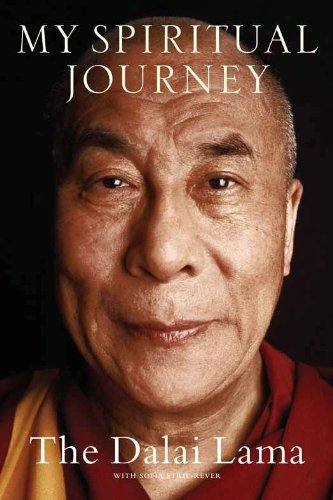
In an excerpt from his new book, My Spiritual Journey, The Dalai Lama shares his belief in the surprising power of laughter and smiles to reach other people, even our enemies.
I Am a Professional Laugher
I have been confronted with many difficulties throughout the course of my life, and my country is going through a critical period. But I laugh often, and my laughter is contagious. When people ask me how I find the strength to laugh now, I reply that I am a professional laugher. Laughing is a characteristic of the Tibetans, who are different in this from the Japanese or the Indians. They are very cheerful, like the Italians, rather than a little reserved, like the Germans or the English.
My cheerfulness also comes from my family. I come from a small village, not a big city, and our way of life is more jovial. We are always amusing ourselves, teasing each other, joking. It’s our habit.
To that is added, as I often say, the responsibility of being realistic. Of course problems are there. But thinking only of the negative aspect doesn’t help to find solutions and it destroys peace of mind. Everything, though, is relative. You can see the positive side of even the worst tragedies if you adopt a holistic perspective. If you take the negative as absolute and definitive, however, you increase your worries and anxiety, whereas by broadening the way you look at a problem you understand what is bad about it, but you accept it. This attitude comes to me, from my practice and from Buddhist philosophy, which help me enormously.
I often say jokingly that a truly selfish person must be altruistic!
Take the loss of our country, for example. We are a stateless people, and we must confront adversity along with many painful circumstances in Tibet itself. Nevertheless, such experiences also bring many benefits.
As for me, I’ve been homeless for half a century. But I have found a large number of new homes throughout the vast world. If I had remained at the Potala, I don’t think I would have had the chance to meet so many personalities, so many heads of state in Asia, Taiwan, the United States, and Europe, popes as well as many famous scientists and economists.
The life of exile is an unfortunate life, but I have always tried to cultivate a happy state of mind, appreciating the opportunities this existence without a settled home, far from all protocol, has offered me. This way I have been able to preserve my inner peace.
I Love the Smile, Unique to Humans
If we are content just to think that compassion, rationality, and patience are good, that is not actually enough to develop these qualities. Difficulties provide the occasion to put them into practice. Who can make such occasions arise? Certainly not our friends, but rather our enemies, for they are the ones who pose the most problems. So that we truly want to progress on the path, we must regard our enemies as our best teachers.
For whoever holds love and compassion in high esteem, the practice of tolerance is essential, and it requires an enemy. We must be grateful to our enemies, then, because they help us best engender a serene mind! Anger and hatred are the real enemies that we must confront and defeat, not the “enemies” who appear from time to time in our lives.
Of course it is natural and right that we all want to have friends. I often say jokingly that a truly selfish person must be altruistic! You have to take care of others, of their well-being, by helping them and serving them, to have even more friends and make more smiles blossom. The result? When you yourself need help, you will find all you need! On the other hand, if you neglect others’ happiness, you will be the loser in the long run. Is friendship born of arguments, anger, jealousy, and unbridled competition? I don’t think so. Only affection produces authentic friends.
In contemporary materialistic society, if you have money and power you have the impression of having a lot of friends. But they aren’t your friends; they are the friends of your money and power. If you lose your wealth and influence you will have trouble finding those people again.
Unfortunately, so long as things are going well, we think we can get along by ourselves. However, as our situation and health decline, we soon realize how wrong we were. That is when we understand who really helps us. To prepare ourselves for such a time, by making true friends who are useful when we need them most, we must cultivate altruism.
As for me, I always want more friends. I love smiles, and my wish is to see more smiles, real smiles, for there are many kinds—sarcastic, artificial, or diplomatic. Some smiles don’t arouse any satisfaction, and some even engender suspicion or fear. An authentic smile, though, arouses an authentic feeling of freshness, and I think the smile belongs only to human beings. If we want those smiles, we must create the reasons that make them appear.
Original article link:
http://www.thedailybeast.com/articles/2010/10/24/dalai-lama-on-laughter-and-compassion.html
Subscribe to:
Posts (Atom)