Showing posts with label christian. Show all posts
Monday, January 28, 2019
The Dalai Lama Meets with Students from the USA & Israel
Thekchen Chöling, Dharamsala, HP, India - This morning, His Holiness the Dalai Lama met with a group of 51 students and 6 staff members of Kivunim. This department of Hebrew College offers an academic gap year program for North American High School graduates based in Jerusalem with field trip visits to 11 other countries. His Holiness welcomed them to Dharamsala—his home for the last sixty years.
"All of us seven billion human beings are mentally, emotionally and physically same,” he told them. “Whether you are a Muslim, a Jew, a Christian or belong to any other faith, there is no difference in the way we are born or the way we die. We begin our lives basking in our mother’s affection, without which we would not have survived.
“Scientists have evidence that basic human nature is compassionate. They have also found that the opposite, constant anger and hatred, weaken our immune systems. Therefore, just as we teach physical hygiene to preserve our physical health, in order for people to learn how to maintain a happy, peaceful mind, they need to learn emotional hygiene—how to tackle their destructive emotions.”
His Holiness explained that he is committed to promoting basic human values because of his concern that people should be able to lead their lives in joy and peace. In this connection he is also committed to encouraging religious harmony because, despite differences in their philosophical views, all major religious traditions convey a similar message of love and compassion, patience and tolerance and so forth. He acknowledged that belief in a merciful creator God is a powerful basis for viewing our fellow creatures as brothers and sisters. Being responsible for your own actions, as taught among non-theistic traditions, has a similar effect.
His Holiness mentioned how sad he feels to see conflict in the name of religion:
"Religion is supposed to bring people closer together, so it’s unthinkable that it should be used create conflict. It is particularly sad when members of different denominations of the same religion, such as Sunni and Shia Muslims, quarrel with each other, however this doesn’t seem to be a problem in India.”
Although he has retired and passed his political responsibilities to an elected leadership in 2011, His Holiness remains deeply concerned about keeping Tibet's rich culture and language alive.
"As far as the Nalanda tradition is concerned, its approach to reality, which depends on the use of reason, is scientific and unique among Buddhist traditions."
Regarding the need to protect Tibet’s ecology, His Holiness reported that scientists have told him that because the natural environment at high altitude is more fragile, when it is damaged it takes much longer to recover.
“Historically, according to Chinese documents, Tibet, Mongolia and China were independent nations in the 7th, 8th and 9th centuries,” His Holiness remarked. “However, the past is past. We need to take account of the reality today. We are not seeking separate status for Tibet. We are prepared to remain with the People’s Republic of China (PRC), provided there is mutual benefit. I have great admiration for the spirit of the European Union that puts the common interest ahead of the interests of its individual members.”
His Holiness answered several questions from the audience and posed for a photographs with them before returning to his residence.
original link & photos: https://www.dalailama.com/news/2019/meeting-with-students-from-the-usa-and-israel
Labels:
14 dalai lama,
Buddhist,
chinese,
christian,
God,
israel,
jew,
Muslim,
nalanda tradition,
Tibet,
tibet ecology,
usa
Friday, August 10, 2018
SIN & THE BONDAGE OF THE WILL-- Not Prevenient Grace
By Reverend Mark Hunnemann
I have, as I’m sure you have too, thought and even agonized over why some of my loved ones seem so disinterested in the gospel. No matter what I say or do, they seem so…in bondage. This is a very personal issue for all of us.
In our opening segment we looked at scriptural foundation for the doctrine of sin. We looked at the Fall of Adam and Eve in the Garden, and the inspired interpretation in Romans 5. We noted that the original sin of Adam transferred to us both guilt and a radically corrupt nature. We next noted two areas of inability: we are unable to do any good, and we are unable to seek God for salvation. Most importantly, I tried to stress that one’s view of sin has a radical view on how they will understand grace. Do you believe in Grace ALONE? If so, then you may need to do some reassessing to see if your view of sin is consistent with sola gratia or inconsistent, or even contrary to it. We all are inconsistent in some areas but I think we would all want to do all we could to avoid inconsistency in this most vital area. Grace is everything to a Christian. I was raised Roman Catholic and I am disturbed that the common view of initial response to gospel or salvation amongst evangelicals sounds very similar to Rome: cooperating with grace.
Who saves whom? Does God save sinners—is it 100% of grace? Or does God save, with our help—90 % God and 10% us? Is the initial salvation process totally from God, or a mixture of God and us? Sanctification is undoubtedly cooperative effort but we’re speaking of initial stage of saving work.
So, not with a desire to win an argument, but to accent grace, I need to show again how sinful sin is—especially in the area of our inability to believe, without divine intervention-or regeneration. That is, regeneration precedes faith. Have you ever heard that? It marks the difference between two distinct views of how God saves. You will note that this is the reverse of how contemporary evangelical preachers present the salvation process: you first believe in order to be regenerated. But the bible teaches that God must first regenerate us in order for us to believe. If we truly believe man is dead in sin, it HAS to be that way.
Are we merely near-sighted or are we blind? Are we are gravely ill or dead in sin? Are we employees of sin or slaves of it? Are we hard of hearing or stone-cold deaf? Are we seeking God or fleeing Him? To cast ourselves 100% of the mercy and grace of God, to blast away any remains of pride, we must see how dreadfully lost we are outside of Christ.
Let us examine just the gospel of John and see how consistently and persistently he presents such a bleak picture of mans moral inability to seek salvation. I’m going through this step by step so if you have questions they may be answered in future segments. My focus—salvation is from God, grace alone!
12 But to all who did receive him, who believed in his name, he gave the right to become children of God, 13 who were born, not of blood nor of the will of the flesh nor of the will of man, but of God.(John 1:13-14) Here we clearly see the confluence of human responsibility and divine initiative. WE receive…WE believe…but the causal factor lying behind that receiving and believing was/is the supernatural act of God—the will of God that brought that decision about. It could not be clearer. God’s will supersedes yours. Divine causality of our belief by regeneration preceding faith. Without divine initiative we could not believe.
Btw in 1:9 Arminian theology misuses this verse to support unbiblical notion of prevenient grace. Does Paul say in Romans 3:21 “But now, God has expressed His prevenient grace…? The notion is antithetical to grace, and I shall return to it.
3 Jesus answered him, “Truly, truly, I say to you, unless one is born againb he cannot see the kingdom of God.” 4 Nicodemus said to him, “How can a man be born when he is old? Can he enter a second time into his mother’s womb and be born?” 5Jesus answered, “Truly, truly, I say to you, unless one is born of water and the Spirit, he cannot enter the kingdom of God. 6 That which is born of the flesh is flesh, and that which is born of the Spirit is spirit.c 7 Do not marvel that I said to you, ‘Youd must be born again.’ 8 The winde blows where it wishes, and you hear its sound, but you do not know where it comes from or where it goes. So it is with everyone who is born of the Spirit.” Born again/regeneration required before seeing kingdom. Jesus is speaking of the necessity of being born again to even ‘see’ the kingdom, not to mention enter into it..which He does mention in v 5!
37 All that the Father gives me will come to me, and whoever comes to me I will never cast out. (6:37) Jesus asserts that the Father gives as a gift (see John 10) some people to Jesus, and these people will come to Him…and He will never cast them out. How many of those that Father has given the Son will come to Him savingly? All of them! But who is it that comes to Jesus for salvation? All those the Father has given Him.
s. 44 No one can come to me unless the Father who sent me draws him. And I will raise him up on the last day. Notice first that this is a universal negative—NO ONE can come to Me. Perhaps we had same English teacher. In class: can I sharpen my pencil? I’m sure you can! May/Can…Can implies ability. So Jesus is talking about inability. But notice there is a conditional clause—unless Father draws him. Same Greek word is used in James 2:6; Acts 16:19 for ‘drag’ Are not the rich the ones who oppress you, and the ones who drag you into court? doubt it means ‘woo or persuade’
19 But when her owners saw that their hope of gain was gone, they seized Paul and Silas and dragged them into the marketplace before the rulers. Same word for ‘dragged’ is what is used here, and I doubt it means ‘woo or persuade’
Kittlels Theological Dictionary defines this word :”to compel by irresistible authority”
64 But there are some of you who do not believe.” (For Jesus knew from the beginning who those were who did not believe, and who it was who would betray him.) 65And he said, “This is why I told you that no one can come to me unless it is granted him by the Father.” Again, we are told by Jesus that nobody CAN come to Him unless that (ability) is granted to him by Father. This was said in adversarial situation and Jesus was explaining, what he said elsewhere you do not believe me bc you are not My sheep.
Truly, truly, I say to you, everyone who practices sin is a slaveb to sin. (8:34) Enslavement to sin due to their nature.
26 but you do not believe because you are not among my sheep. (10:26)
Notice that Jesus does not say that they are not His sheep because they do not believe, but they do not believe BECAUSE they are not His sheep, or elect. Again, He is inferring inability because of their condition.
So, our main point in this segment is that people are by nature unable to come to God and be saved. No amount of persuasion, eloquence or compassionate pleading can awaken a spiritual corpse from the dead.
Picture a corpse lying on the ground. Would any amount of pleading or forcefulness cause the corpse to rise from the dead? That is most accurate analogy to Eph. 2:1—dead in sin. Only God can breathe life into a valley of dry bones.
Or Lazarus. Did he in any way cooperate in his resurrection? Of course not.
The obvious question that arises is: how can God hold someone accountable for something they are unable to do? Or, put another way, if God commands something then does that not imply the ability to be able to do it? And what of man and free will? And most importantly, how does a non-Christian become saved if they are unable to?
I have labored this point of mans utter inability to come to God or believe in Him for one reason: to highlight GRACE. God does the saving—He has to do the saving if man is this lost…this enslaved…this dead. There is no island of righteousness where a person can lean on to extend a hand to reach out for saving life presearver. They are on bottom of pool drowned.
Seems bleak but this should lead one to life of intense prayer, realizing that this is truly impossible from human perspective. Pleading with God and God does use us to bring about
My Arminian brothers and sisters appeal to ‘prevenient grace’ but in this scenario nobody would reply to a general summons.
Arminian view-man cannot be saved apart from God’s grace., but fallen man must cooperate and assent to God’s grace before God will save him. Prior to regeneration, man has the power to accept or reject the grace that could save him.
Augustinian or biblical view—man is totally dependent on the grace of God for his initial response to gospel.
Arguments against prevenient grace.
It is nowhere stated explicitly in bible. John 1:9 does not teach it. THE PURPOSE OF THE VERSE IS TO SAY THAT THE COMING OF THE TRUE LIGHT EXPOSES AND REVEALS WHERE PEOPLE ARE IN THEIR RELATIONSHIP TO GOD.
1. As exceedingly important as this issue is, it should be splashed all over NT. It is not seen anywhere. Proof texts are out of context eisogesis.
2. Romans 3:8ff rejects prevenient grace. Note in 3:21 Paul does not say: “But God in His prevenient grace…” In 1:18 all of mankind is under God’s curse and wrath for rejecting the Father, which prevenient grace says it is extended to ALL people.
3. Why do some respond and others do not? Why do some make use of prevenient grace and others do not?
4. Are they more righteous, smarter, wiser, more humble, more teachable, more….? Any answer would give grounds for boasting.
5. Is not faith a gift from God? Eph. 2:1-10; Phil. 1:29; 2 Peter 1:1 2 Tim 2:24-26; Acts 5:31; 11:18
6. Suspends work of God on will of man
7. Grace becomes ‘penultimate’ cause of salvation…ultimate cause is our reply.
BY R. C. SPROUL
As the name suggests, prevenient grace is grace that "comes before" something. It is normally defined as a work that God does for everybody. He gives all people enough grace to respond to Jesus. That is, it is enough grace to make it possible for people to choose Christ. Those who cooperate with assent to this grace are "elect." Those who refuse to cooperate with this grace are lost.
The strength of this view is that it recognizes that fallen man's spiritual condition is severe enough that it requires God's grace to save him. The weakness of the position may be seen in two ways. If this prevenient grace is merely external to man, then it fails in the same manner that the medicine and the life preserver analogies fail. What good is prevenient grace if offered outwardly to spiritually dead creatures?
On the other hand, if prevenient grace refers to something that God does within the heart of fallen man, then we must ask why it is not always effectual. Why is it that some fallen creatures choose to cooperate with prevenient grace and others choose not to? Doesn't everyone get the same amount?
Think of it this way, in personal terms. If you are a Christian you are surely aware of other people who are not Christians. Why is it that you have chosen Christ and they have not? Why did you say yes to prevenient grace while they said no? Was it because you were more righteous than they were? If so, then indeed you have something in which to boast. Was that greater righteousness something you achieved on your own or was it the gift of God? If it was something you achieved, then at the bottom line your salvation depends on your own righteousness. If the righteousness was a gift, then why didn't God give the same gift to everybody?
Perhaps it wasn't because you were more righteous. Perhaps it was because you are more intelligent. Why are you more intelligent? Because you study more (which really means you are more righteous)? Or are you more intelligent because God gave you a gift of intelligence he withheld from others?
To be sure, most Christians who hold to the prevenient grace view would shrink from such answers. They see the implied arrogance in them. Rather they are more likely to say, "No, I chose Christ because I recognized my desperate need for him."
That certainly sounds more humble. But I must press the question. Why did you recognize your desperate need for Christ while your neighbor didn't? Was it because you were more righteous than your neighbor, or more intelligent? (or more humble or broken?)
The $64,000 question for advocates of prevenient grace is why some people cooperate with it and others' don't. How we answer that will reveal how gracious we believe our salvation really is.
The $64,000 question is, "Does the Bible teach such a doctrine of prevenient grace? If so, where?"
We conclude that our salvation is of the Lord. He is the One who regenerates us. Those whom he regenerates come to Christ. Without regeneration no one will ever come to Christ. With regeneration no one will ever reject him. God's saving grace effects what he intends to effect by it. (Chosen by God).
Mark Hunnemann is the author of Seeing Ghosts Through God's Eyes: A Worldview Analysis of Earthbound Spirits. It's also available in eBook format.
Labels:
adam & eve,
bible,
bondage of the will,
christian,
garden of eden,
God,
jesus christ,
john 1:9,
kittlels theological dictionary,
prevenient grace,
r.c. sproul,
sin
Saturday, July 28, 2018
Introduction to Systematic Theology: Why Knowing God & Solid Biblical Content is Especially Important in a Pagan Culture
By Reverend Mark Hunnemann
Theology is applying the whole of the bible to the whole of life. For example, when we study God’s omnipotence, we will ask what does the entire bible say about it, and try to apply it.
My name is Mark Hunnemann and in 1973 I became a Christian, and it was quite a change. I immediately was introduced to JI Packer, John Stott, C.S. Lewis, Francis Schaeffer, RC Sproul and other wonderful writers who had profound influence upon me…their theology and love for the Lord. Kept me from slipping back into old lifestyle.
I went to seminary and was a pastor for many years and had the honor of preaching the whole counsel of God. I am sitting because this is not church, and I am teaching—not preaching.. I invite you to fact check everything I say. I’ve written a book entitled Seeing Ghosts Through God's Eyes and working on a second one. I have been deeply involved in helping folks who are struggling with demonic oppression—passion of mine.
We live a pagan culture in which mind-less experience is the key to spiritualty, but it leads to delusion and oppression. We and our children need as much biblical content as possible, and the most loving thing you can do as a parent and grandparent is to grow in your knowledge and love of God.
In a sense, every Christian is a theologian—for better or for worse—and the ‘for worse’ aspect is no small matter. The epistles and Jesus warn us that heresies are destructive attacks by wolves against God’s sheep; and wolves are not very kind to sheep. Therein lies my passion for this series. Gallop recently did a poll and it left me speechless—the amount of biblical theological ignorance amongst professing Christians is astonishingly high. Breaks my heart. And my passion is to take profound truth and make it understandable and catch on fire! So, I invite you on a journey of discovery together—to delve deeply into the meat of God’s Word. I believe there are many Christians hungering for solid meat and I want to do my humble part to help in that regard.
The bible says that as a man thinks in his heart, so is he. The ideas that don’t just flit around our brains momentarily, but the ones that penetrate the heart, are the ideas that shape our lives. And ideas have legs. We are what we think. Sound theology is required for a godly life because we have to first know the truth before we can do the truth. So, no Christian can avoid theology. Some may strenuously deny it, but every Christian has a theology. The issue is do we have a sound theology? Do we embrace true or false doctrine? You may be surprised to hear this but every wrong belief I embrace is sin due to not loving God with all of my mind.
Before giving a more concrete basis for studying theology let me address several common misconceptions or concerns—with brief replies.
1. First, does not Jesus teaching about embracing the Kingdom with child-like faith (Mark 10:15) imply a simple faith? Yes, but there is world of difference between child-like faith and child-ish faith. The latter is obstinate and refuses to bow before authority and settles for a diet of spiritual milk. The implicit trust of a child is something we never grow out of but we are to grow to into maturity—solid meat. 11 About this we have much to say, and it is hard to explain, since you have become dull of hearing. 12 For though by this time you ought to be teachers, you need someone to teach you again the basic principles of the oracles of God. You need milk, not solid food, 13 for everyone who lives on milk is unskilled in the word of righteousness, since he is a child. 14 But solid food is for the mature, for those who have their powers of discernment trained by constant practice to distinguish good from evil.
2. Many Christians have developed an aversion to theology because of their distrust of theologians. I understand…and have experience first hand of the devastating effects of higher-critical methods of ‘scholarship’ which is just a mask for unbelief and often shoddy scholarship. Most seriously, they have vandalized God’s holy Word, and caused serious damage to people. Academia is filled with wolves who are unregenerate pagans who are intellectually arrogant. But please remember that we must not throw out the baby with the bath water; to reject theology is to commit spiritual suicide.
3. The false pietism of our day denigrates the mind. But the pattern in scripture is deep doctrine and then application. EG But we are told in Romans 12:1-2 to be transformed through the renewing of our minds. some emphasize a direct experience with the Holy Spirit, which bypasses the mind,
4. Theology breeds arguments and controversy. Yes, it does because truth implies error, and error must be confronted or we accommodate it by our silence. What kind of world do you want our grandkids to live in? Jesus’s life was a storm cloud of controversy, as was Paul's because truth matters. It is godless controversy we are to avoid, not godly controversy, which is needed. To avoid controversy is to avoid Christ. We are not to argue about non-important issues, and the THE mark of a Christian is love.
5. We have unconsciously been influenced by the relativization and subjectivism of the truth. The concept of truth has changed and this has belittled the importance of the content of truth and the intellect. One of the glories of our faith is that it is a system of coherent, rational truth. It is much more than a system of truth, but not less. We should rejoice in this in light of the content-less spirituality of pagan, New Age. One hand clapping may sound profound but it means nothing rational. I recently did a video on the “Cosmic Christ” and I chose this title carefully because I wanted to catch the attention of New Agers and I wanted to accent the cosmic dimension of the atonement-Christus victor. But it was mainly to show the CONTENT of the true Christ vs the myth of the pagan conception of Christ. I next want to do one entitled the Cosmic Christ and His alien, extra-terrestrial righteousness! Hehe Actually, I am not kidding because the term ‘alien righteousness’ is a theological term for the righteousness of Christ which is extra-terrestrial—outside the earth, and reserved in heaven. See if I can work ET in the title too! His righteousness is imputed to us in justification.
Suppose someone says: why theology? All I need is to love to Jesus. First, which Jesus? (New Age, Jehovas Witness, etc.) Who is He and what did He do? What happened on the cross? Second, ‘love’ can be defined and expressed in a thousand different ways. And Jesus Himself said: “teaching them ALL that I commanded you.”
Positive role of theology: just as we get to know a person better as we know more about them, so our knowledge of and love for God should grow as we study about His Person and work---in creation and redemption. For our soul to be inflamed with a passion for God then it first has to pass through our minds. (CS Lewis quote)
I am at a point in life at age 62 where I wish to record the truths of God’s Word. Knowledge without devotion is cold, dead orthodoxy. But devotion without knowledge is irrational instability; one is left vulnerable to being undiscerning to the wiles of the devil…and I see people falling left and right. How can people believe in earthbound spirits? Recently a friend went back to being a witch. 11 And he gave the apostles, the prophets, the evangelists, the shepherdsc and teachers,d 12 to equip the saints for the work of ministry, for building up the body of Christ, 13until we all attain to the unity of the faith and of the knowledge of the Son of God, to mature manhood,e to the measure of the stature of the fullness of Christ, 14so that we may no longer be children, tossed to and fro by the waves and carried about by every wind of doctrine, by human cunning, by craftiness in deceitful schemes.
Avoid syncretism which is blending of non-Christian thought with bible. Solid theology helps avoid that..become discerning. Like eg of bank teller and counterfeit.
Growing in the knowledge of God is a great joy and honor. It is a delight to the soul. Takes effort and discipline, but this is a matter of life and death—even eternal life and death. And this series is designed, by God’s grace, to enable us to love Him more and be more effective in your witness to a lost and broken world. Dig in!
Mark Hunnemann is the author of Seeing Ghosts Through God's Eyes: A Worldview Analysis of Earthbound Spirits. It's also available in eBook format.
Labels:
bible,
C.S. Lewis,
christian,
cosmic christ,
Faith,
ghosts,
God,
jesus christ,
new age,
pagan culture,
Son of God,
systematic theology
Friday, July 6, 2018
Discovering God’s Will/s for your Life
By Revereand Mark Hunnemann
I can remember it vividly. I was looking at a chart (back in ‘70’s) which had a diagram of how to follow God’s ‘perfect will’ for my life—major, marriage partner, vocation, where to live, every detail of life. More than one para-church organizations used this approach with zest. Then the anxiety set in: what happens if I blow it? Am I consigned for God’s second best for the rest of my life? Such was my introduction to ‘God’s Will.’ But I have grown a bit (older and waist size) since then and realized that there is more than one will of God, and what had been taught as ‘gospel’ regarding the perfect will of God would itself come under intense scrutiny. A book was published which finally brought some sanity to the situation, but it sure stirred up a hornets nest!
I hope this discussion, coming on the heels of our dealing with God’s sovereign decrees, will maximally benefit and edify you. I have seen that there are at least three ‘wills of God’ in the Word of God. God’s sovereign/decretive will, preceptive will, and His will of wisdom. Perhaps that we experience different kinds of wills, desires and pleasures ourselves are analogous. Theologians distinguish between God’s antecedent and consequent will but that does not serve our purpose, and His affective will.
God’s sovereign will, or decretive will (decrees) is His eternal purposes by which God foreordains everything that comes to pass. This focuses on His Lordship attribute of control, where His preceptive will accents His attribute of authority. For the most part, God’s decretive will is hidden (Deut, 29:29) until it happens. 1.20As for you, you meant evil against me, but God meant it for good, to bring it about that many peopleb should be kept alive, as they are today. 21So do not fear; I will provide for you and your little ones.” Thus he comforted them and spoke kindly to them. (Gen. 50:20) I included the next verse because this ‘will’ reminds us that God is our final situation/environment because he decrees all that happens to us (Rom. 8:28), and this helped Joseph to not be bitter and to calm his brothers fears. We can learn from this.
25 At that time Jesus declared, “I thank you, Father, Lord of heaven and earth, that you have hidden these things from the wise and understanding and revealed them to little children; 26 yes, Father, for such was your gracious will. 27 All things have been handed over to me by my Father, and no one knows the Son except the Father, and no one knows the Father except the Son and anyone to whom the Son chooses to reveal him.(Matt. 11:25-27) (Ps. 51:18; 115:3; Is. 46:10; Jer. 49:20; 50:45; Dan 4:17; Acts 2:32; Rom 9:18-19; Eph 1:11; James 1:18; Rev 4:11)
These two verses explicitly refer to God’s decretive will, as well as the cited texts) Since we spent an entire segment last time on God’s decretive will I think we can leave it at that. Except to compare it briefly later. It just helps us to see that there are more than one will of God, though they are united in His mind.
2.21 “Not everyone who says to me, ‘Lord, Lord,’ will enter the kingdom of heaven, but the one who does the will of my Father who is in heaven (Matt. 7:21)
7 Therefore do not be foolish, but understand what the will of the Lord is. (Eph. 5:17) b
2 Do not be conformed to this world,c but be transformed by the renewal of your mind, that by testing you may discern what is the will of God, what is good and acceptable and perfect.d (Rom. 12:2)
34 Jesus said to them, “My food is to do the will of him who sent me and to accomplish his work. (John 4:34)
3 For this is the will of God, your sanctification:b that you abstain from sexual immorality; 4that each one of you know how to control his own bodyc in holiness and honor, (1 Thess. 4:3-4)
16 Rejoice always, 17pray without ceasing, 18give thanks in all circumstances; for this is the will of God in Christ Jesus for you. 19 Do not quench the Spirit. (1 Thess. 5:16-19)
We see in these texts, which could be multiplied many fold, reveal the purpose of God’s preceptive will—God’s words on how to live in a way pleasing to Him. And as we have noted, God’s sovereign will can never be broken, but God’s preceptive or moral will is broken all the time.
We are to meditate on God’s moral law (Ps. 1) and the entire 119th psalm is an eloquent appeal to obey to God’s glorious and lovely moral law. As we noted, God’s decretive will accents His control, and His moral law His authority. He has the right to elicit absolute obligation and obedience from His creatures, and especially those creatures whom he has ransomed. God’s preceptive will is His revealed law or commandments, which we have the power but not the right to break. If we are seeking God’s will, this is primarily it.
We see from the language of the preceptive texts above that their purpose is to show us God’s will for our lives. As a rule, God’s moral law is what we are to seek as God’s will. What is God’s will for you at any given moment? Love Him with all your being; be filled with the Spirit; flee from idolatry and sexual sin; all the 1,050 commands in New Testament in addition to moral law of Old Testament. If we obey His moral law, then 90 % of our guidance problems are solved.
3. However, speaking as a retired pastor, what if someone asks: “How can I find God’s will for my life regarding this job, marriage (fill in blank)?” It seems to me that it would unkind of me to speak in terms of God’s decree: ‘Whatever happens is God’s will for you.” And to speak preceptively, may miss his point entirely. He wants specific guidance regarding a specific issue: who to marry, if to marry, which vocation to choose, what city to move to, etc? Hard to find moral laws explicitly pertaining to those, except, for example, marry only a Christian.
We spoke of the sufficiency of God’s Word but there are situations where folks need help in applying that Word. Only Scripture can provide conscience binding norms for decision making but there are ways of seeking wisdom. Indeed Proverbs and James speak of wisdom relating to decision making. (James 1:5) The fear of the Lord is the beginning of wisdom (Prov. 1:7). Seeking wisdom given by the Holy Spirit, we can apply the precepts of the Lord to life. The notion that the will of God is ONLY ONE COURSE OF ACTION, as I was taught (God’s perfect will) causes confusion and anxiety. If I have a choice to move to Chicago or Atlanta, the reality is that either possibility may be equally acceptable to God. If our motives are right and no moral law is broken in moving to either city, then we can assume that either decision is within the will of God.
But we can refine our wisdom decision further. Though nothing obvious is against God’s moral law in moving to Chicago, after prayer and meditating, it becomes apparent that my ‘motivated abilities’ in work would be better tapped into an Atlanta job—then I should pursue it. Or, knowing myself, Atlanta would present some overwhelming temptation situations, then I should consider Chicago. These pluses and minuses need to be weighed. And all along bathed in prayer….seeking the Lord.
According to Proverbs, wisdom is often found via intelligence, prayer, skills, feelings, imagination, understanding circumstances and other people, self knowledge, and possible consequences of an action. Scripture wants us to make decisions as wisely as possible. If it is clear that analyzing the pluses and minuses yields a clear result, then we can assume that is God’s moral will. God’s preceptive will includes primarily the Word of God itself but also ‘good and necessary consequences’ of Scripture. If something can be clearly deduced from the Word of God, then it is the Word of God in application (must be careful here, WCF 1:6—see below). Chapter 1: Of The Holy Scriptures, Section 6: VI. The whole counsel of God concerning all things necessary for His own glory, man's salvation, faith and life, is either expressly set down in Scripture, or by good and necessary consequence may be deduced from Scripture:
But if after doing a prayerful weighing of pros and cons, and both are equally wise, then either decision is within the will of God—contrary to the ‘perfect will of God’ notion, which has caused much anxiety and constant worry: did that one wrong turn consign me God’s Plan B for the rest of my life? That is awful and yet it reigned supreme for a long time as THE paradigm for discerning Gods will. I remember the brouhaha that ensued when a book was written that challenged it and thoroughly demolished the notion as contrary to God’s Word and harmful.
Let us summarize this discussion by seeing the connection of the various decrees and how it leads to wise decision making. God guides us through His decrees, His written Word/preceptive will, and Spirit given wisdom.
By God’s sovereign decrees He opens and closes doors—presenting some options and preventing others. If a house is sold then it is not for you. If a person is 3,000 miles away, then they are not for you as a potential marriage partner! Second, by His preceptive will He shows us how to respond to these circumstances. If a job requires you to work 90 hours a week, and wreck relationships, then it is not good/moral. Lastly, Spirit given wisdom through prayer enables us to apply the Word of God and other important factors (e.g. how close do you want to be to your aging mother?) to our circumstances.
I think it is this process that Paul has in mind in Romans 12:1-2 and Eph. 5:10 where we grow in maturity by reading God’s Word and constantly and prayerfully applying it to our lives. The more we read the better we can apply God’s Word, and the more we apply the Word, the better we understand God’s Word, and this leads to deeper understanding of application/circumstances, etc. The hermeneutical circle I mentioned before.
Again, when we make unwise decisions, we have not missed out forever on God’s will for our lives. After we have made an unwise decision, we should turn to God’s wisdom again, confident that we will be led in the path of blessing.
These three categories: decree, precept, and wisdom, are perspectivally related. God decrees to act according to His precepts and wisdom. His precepts includes bowing before God’s sovereign decrees and seeking wisdom. And His wisdom is displayed both in His decrees and in His Word.
May I quickly apply this to singles seeking to be married. Some would tell this to singles: trust solely in the Lord, and when you give that desire over to God, then He will bring the perfect man of His choice (applying this now to women). Usually some person will testify that they, too, wanted to get married but once they ‘gave that urge up to God’, then God brought a husband to her. Just pray, surrender your urges and He will bring the man of His choice your way.
First, it was in the perfect garden when GOD uttered the first malediction—it was not good for man to be alone. Here is perfect Adam with deep longing for suitable companion and God did not tell him that when he ‘gets over it’, then I will provide for you. No, it is a God-given desire…not to be sublimated. It is one thing to surrender the desire to God and wait assertively (see below), but it is quite another to imply you need to basically deny the very urge God implanted within us—mirroring Trinity. Bring that urge to God and honestly acknowledge it before Him as psalmist expressed his honest emotions.
Second, this is changing, but many Christian women still think they have to be entirely passive in their search for a husband. Would you be passive in a search for a job? Then why be passive here? It is okay to visit churches to worship AND to seek suitable singles ministries/people. I led a singles bible study years ago, and I knew that a big motive was to meet others, and that was fine with me. We could learn God’s Word and folks meet too. Numerous marriages came out of the bible study! Dating sites are a possibility.
Third, perhaps most controversial, I do not know if God has the ‘man of His perfect choice’ for you. I am certain there are no perfect men or women! We live in fallen world, and if you ever say: perfect marriage or none, then you will always get none.But I am convinced that if you follow principles above, then there are possibly numerous different guys/gals you could marry happily, if you are both walking in the Spirit. And it would be within God’s will for you to marry either Jim or Bob (or Jill or Lisa), if they both know the Lord, and everything else being equal—using wisdom regarding compatibility. Perhaps I should have done separate blog on this subject but these are the basic principles of wisdom. I’ll stop there but I hope this helped in your understanding and discerning God’s will for you.
Mark Hunnemann is the author of Seeing Ghosts Through God's Eyes: A Worldview Analysis of Earthbound Spirits. It's also available in eBook format.
Labels:
christ jesus,
christian,
God,
god's will,
God's Word,
Holy Spirit,
kingdom of heaven,
lord,
proverbs,
scripture
Monday, October 31, 2016
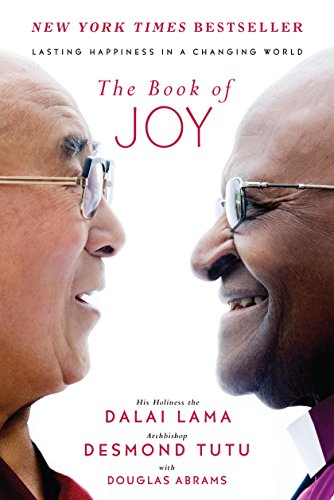
Dalai Lama & Desmond Tutu — The Best of Spiritual Friends
His Holiness The Dalai Lama and Archbishop Desmond Tutu — they’re two of the world’s best-known spiritual leaders, and dear, dear friends as well. It’s a friendship rooted in a shared sense of joy, and of purpose: to foster and spread that joy around the globe, in order to address and counter its despair. Here, from The Book of Joy, their new book with Douglas Abrams, we get an inside look at this one-of-a-kind spiritual friendship.
The Dalai Lama said, “I was very sad to miss your birthday. When I found out that you might come here, I was really surprised. I knew your health was not good and that you were also very old, and to reach here is not easy.”
“Yes,” the Archbishop said, “that’s quite right.”
“But,” the Dalai Lama continued, “when I heard that everything was finalized and the date and hour was approaching I really felt happy and excited. I really appreciate your friendship and your sense of responsibility to do what you can for a better humanity.”
Earlier in the week, the Archbishop and the Dalai Lama had reflected on what was so special about their friendship with characteristic humor.
“He’s always teasing me,” the Archbishop laughed. “Almost the first time we met—do you remember? Maybe the first time you were a little reserved, but by the second time you were taking my cap off my head. I don’t know that you wake up in the morning and say I’m going to become a friend to the Dalai Lama. It just happens. Scientists will come afterwards and analyze it. But I don’t think that he woke up either—at three—and said, “I think I’m going to be friends with that large-nosed black man from Africa. I think it was a communication of the heart. When we kept quiet, our hearts discovered that they were kindred spirits.
The Dalai Lama erupted into a belly laugh and then began pointing at the Archbishop. “His face, his face,” he said, gesturing to the Archbishop’s bald head. “He looks like a monk now, doesn’t he?”
“I admire him enormously. Oh, he’s going to get proud. But I always say to people, after being in exile over 50 years how many would show the same serenity, the same joy, and the eagerness to spread goodness and compassion in the world.
“I think I would be very sulky, and I think there’d be a part of me that was always sad and it would show in my face. It doesn’t in his. I mean I’m just saying, he is there for us as a beacon to tell us that you can, in fact, overcome some of the most horrendous circumstances, and, and emerge on the other side, not broken. So he is a very great gift to the world. And maybe the Chinese, without intending it, have given the world a wonderful gift.
“Thank you,” the Dalai Lama said quietly, perhaps humbled by the praise.
“Pay me, pay me,” the Archbishop said.
“I will pay. I will pay with a few nice words.”
“At our first meeting I notice this person. I always look at people, firstly, human level, so I do not consider importance of their rank or position. So, on the human level, this person very nice, humble, I think very, very, very, joyful.
He was holding the Archbishop’s arm. “And then, you see, once you connect on the human level, you become close friends and that friendship never changes. But on another level, this person is a very funny person,” he said slapping his arm playfully. “I love that. He is always teasing me, and also I am teasing him. So, we really become something quite special.
“And finally, right from the beginning, you always speak out about the truth and the justice of the Tibetan cause. As a Tibetan, I very much appreciate.
“Whenever he is at Nobel laureate meetings, they are full of joy. The atmosphere is something different. Then in recent years because of his age and also his physical condition, you see, he could not attend. Of course, many other Nobel laureates and many other Nobel laureates are wonderful ladies—“
“You are a monk, remember?” the Archbishop scolded.
“But when you are not there, something missing, really. Really, really. The other Nobel laureates also feel that, I think. So the relationship is something unique and something very special.”
“Thank you. I paid him,” the Archbishop said, as if pretending to stage whisper.
The Dalai Lama erupted into a belly laugh and then began pointing at the Archbishop. “His face, his face,” he said, gesturing to the Archbishop’s bald head. “He looks like a monk now, doesn’t he?” Then the Dalai Lama drew his hand into the shape of an eye. “When I see your eyes—” Then he squeezed his nose playfully, “—and, of course, your nose—”
The Archbishop could not help but giggle at the mention of his nose.
Then the Dalai Lama’s playful tone changed, as he pointed at the Archbishop’s face warmly. “This picture, special picture.” Then he paused. “I think, at time of my death…” The word death hung in the air, his words a prophecy. “…I will remember you.”
I could hear everyone in the room, even the camera operators, gasp. The Archbishop looked down and hummed deeply, obviously humbled and moved by the Dalai Lama’s words. Could there be a truer sign of love: to see another’s face at the time of death.
“Thank you. Thank you,” was all the Archbishop could say, all that could be said.
“So perhaps,” the Dalai Lama said, “according to your religious tradition, we may meet in heaven in the presence of God. You as a good Christian practitioner, you go first.” The Archbishop now chuckled heartily and the room seemed to breathe again. “You may help me and bring us together.” We laughed imagining the Archbishop bargaining with St. Peter at the pearly gates trying get special admission for the Dalai Lama.
“But from the Buddhist viewpoint,” the Dalai Lama continued, “once in a life, you develop some sort of special close connection, then that sort of impact will carry life after life. That’s Buddhist viewpoint. So maybe even then. But now, I’m looking forward to another occasion to see you again—somewhere that only God knows.”
Reprinted from The Book of Joy by arrangement with Avery Books, a member of Penguin Group (USA) LLC, A Penguin Random House Company. Copyright © 2016, The Dalai Lama Trust, Desmond Tutu, and Douglas Abrams.
Original link & photos http://www.lionsroar.com/the-dalai-lama-and-desmond-tutu-the-best-of-spiritual-friends/
Labels:
14th Dalai Lama,
africa,
Archbishop Desmond Tutu,
Buddhist,
christian,
douglas abrams,
monk,
nobel laureates,
spiritual friends & leaders,
the book of joy,
Tibet
Thursday, April 21, 2016
Battlefields: Hallowed or Haunted?
By Reverend Mark Hunnemann
Hebrews 4-13
4 Therefore, while the promise of entering his rest still stands, let us fear lest any of you should seem to have failed to reach it. 2 For good news came to us just as to them, but the message they heard did not benefit them, because they were not united by faith with those who listened.[a] 3 For we who have believed enter that rest, as he has said,
“As I swore in my wrath,
‘They shall not enter my rest,’”
although his works were finished from the foundation of the world. 4 For he has somewhere spoken of the seventh day in this way: “And God rested on the seventh day from all his works.”
5 And again in this passage he said,
“They shall not enter my rest.”
6 Since therefore it remains for some to enter it, and those who formerly received the good news failed to enter because of disobedience,
7 again he appoints a certain day, “Today,” saying through David so long afterward, in the words already quoted,
“Today, if you hear his voice,
do not harden your hearts.”
8 For if Joshua had given them rest, God[b] would not have spoken of another day later on.
9 So then, there remains a Sabbath rest for the people of God,
10 for whoever has entered God's rest has also rested from his works as God did from his.
11 Let us therefore strive to enter that rest, so that no one may fall by the same sort of disobedience. 12 For the word of God is living and active, sharper than any two-edged sword, piercing to the division of soul and of spirit, of joints and of marrow, and discerning the thoughts and intentions of the heart.
13 And no creature is hidden from his sight, but all are naked and exposed to the eyes of him to whom we must give account.
My dad was a WW II vet. Shortly before he died the day after his 90th birthday, we would sit together at night and he would often relate stories regarding the war…something he didn’t do earlier in life. I held on to every word, even though I had heard some stories several times. 70 years later, his experience in Europe left an indelible mark upon his psyche. More often than not, my father would speak in a quiet, almost reverent tone, about all of the army pilots he never saw again.
He also spoke of his brother Tom who fought under Patton at the Battle of the Bulge.
Last night I watched a re-enactment of D-Day. It was heart wrenching as the German machine gunners cut men down quickly. If they made it alive to shore, they had a 1,000 yards of sand (with mines and all kinds of obstacles) to cross-- again desperately trying to avoid the advanced German machine guns. At first everything that could go wrong, did go wrong. The ‘swimming tanks’ sank in high waves…the bombers missed their marks—both of which were to give strong support to the men jumping out of the troop carriers.
Most of these men were in their late teens or early twenties.
Going backwards in time to March 15, 1781 the Battle of Guilford Courthouse took place on the very land upon which my apartment was built. Our apartment is directly adjacent to this National Military Park. It was a particularly bloody battle that prepared for Yorktown. Underneath and all around where I now sit, the larger battle was waged. And young men died.
Growing up, families would picnic and frolic on the grounds in the Park in front of the huge statue of General Greene on his horse. However, there is now a sign which forbids any such activity out of respect for the soldiers who died there.
The Korean War…The Vietnam War…The Civil War….etc. All had combatants who were also young….so very young. Through the course of human history, I doubt there has every been a time where there wasn’t a war being waged somewhere on earth. As usual, the young men fought the kings and generals wars.
When I view the beach of Normandy, or the Military Park around my apartment, I view these areas as hallowed ground. Of course, not all wars waged throughout history were what theologians call “just wars.” In fact, much of what was referred to as ‘Manifest Destiny” was an excuse for displacing and stealing people’s land, and waging unjust battles. Nevertheless, only God knows all the details, and it seems only right to consider battlefields to be hallowed ground. After Cain had killed Abel, the Lord said, “The voice of your brother’s blood is crying to me from the ground.”
The wars we fought for freedom, are they hallowed ground or haunted ground? I need to define what I mean by haunted: by haunted I mean that these sites are magnets for the deceased souls of the young combatants who died horrific deaths there.
According to many in the paranormal community there are certain kinds of deaths that raise the likelihood of one becoming trapped—not knowing one is dead, a violent death, an emotional death, a death that is accompanied by unfinished business, or not wanting to face judgment and go to hell.
I realize that battlefields, like Gettysburg, are also known for residual activity. But that is a distinct issue, which I cannot deal with here. I want to ask this: are these battlefields filled with the souls of deceased soldiers, or are they resting in peace? (provided they know Jesus)
One way to determine if a belief is true is extend it out to its logical conclusions….like the alleged ‘death criteria’ of the paranormal community.
Imagine you are 19 years old. You are so frightened before this battle you can hardly breathe. Behind you have left a young bride and child…who was born weeks before your deployment.
Then, it happens. An errant napalm bomb is flying your way and you desperately seek cover. Friendly fire is killing every thing moving in the kill box and your band of brothers accidentally slipped into the kill zone. Covered in burning napalm you die an unspeakably horrible painful death….by friendly fire…leaving a traumatized wife at home. So much life left unlived.
The ‘death criteria’ vs the promise of entering rest…RIP
EVERY criteria mentioned above is met by virtually ALL the men who die that day…or throughout the history of mankind in wars/battles. Violent…extremely emotional….violent death…so very young that unfinished business is written all over their short lives.
According to what the paranormal community affirms as a consensus, that battlefield SHOULD become crawling with the souls of valiant men who gave their lives to protect our safety and freedom. No RIP…no eternal rest. At least not right away because there is no consensus as to how long people get ‘stuck’ here.
Christians in the paranormal community are in a particularly difficult ‘pickle’ because they want to affirm that heaven is real, but what do they do with the ‘death criteria’? Without the death criteria, then there would be no basis for ghosts.
I must press this point to make the paranormal community to see the corner they have painted themselves into. Instead of being hallowed ground, the land I live on must be haunted ground of the souls of untold number of deceased soldiers.
I find that notion so absolutely horrible, that it reveals the absurdity of the notion of ghosts.
When paranormal investigators investigate a location, one of the key questions asked is: did someone/s die on the property? And if the death was violent, then that usually becomes a crucial piece of the equation. If you multiply that by hundreds or thousands of men who died violent deaths in battle, then that would naturally lead one to think of multiple haunting. However, if they were consistent, ALL of the deaths should lead to entrapment. If not, who is making the decision as to which violent death ‘stuck’ but others didn’t? I can assure you that the Living God doesn’t make any such distinctions.
Battlefields are simply an intensified version of life. ALL deaths leave unfinished business…all are emotional to some extent, etc. Having lost both parents as well as four siblings to very emotional and ‘untimely deaths’ I know from personal experience the alleged death criteria. As a human being, and as a former pastor, I know how hope-stripping the notion of ghosts can be on the remaining loved ones.
In my book and blogs I have tried to challenge folks to re-think the basic beliefs of the paranormal community. When you read the average age of those who died in Gettysburg, WWII, Vietnam, ect it is usually late teens and early 20’s…. and those beliefs are put to a severe challenge. From any perspective their deaths are horrible in the extreme. However, Jesus offers certain hope and rest, while the prospect of entrapment strips hope.
When I walk through the National Military Park next to my apartment, I am filled with a sense of the sacred. I can almost hear the muted cries of the mortally wounded, spilling their blood and causing this land to be hallowed ground.
In an area where, if the death criteria were true, I should have seen many ghosts. In fact, I have not seen any. Furthermore, after cleansing over 50 active sites, I have never seen a ghost in my life. Only demons pretending to be deceased humans.
I know from experience that graveyards and battlefields can attract demonic activity. However, that does not diminish or defile the hallowed-ness of the ground. The ground has been soaked in the blood of His image bearers and that is the final and defining reality concerning it.
The text from Hebrews 4 is a picture of the rest believers enter when they are saved, and more fully when they die. We either die ‘in our sins’ or we die ‘in Christ’, and our deaths are determinative of our eternal destiny. This text does not ‘play around’…it is a sober text that both warns and comforts. If one dies outside of Christ then they enter an eternal state of restlessness in hell. However, note how often the author of Hebrews speaks of the REST believers enter. There is tension between the ‘now and not yet’. Now, we enter our rest in Christ, but when we die we RIP—rest in peace in Jesus. Both are certain, which does not allow for notion of earthbound spirits.
Does the God presented in these verses sound like He would allow anyone to hang around earth in order to avoid judgment? The notion is preposterous and unworthy of coming from the mouth of a Christian. Yet, there are not a few professing Christians who assert that very thing. Who do we think we are—God?
When Samuel was allowed to visit Saul in a singular incident (nothing else like this in the bible) he complained that ‘his rest had been disturbed’. He had entered his eternal rest (Hebrews 11,12) in heaven.
If you believe that folks who die can consciously avoid standing before the holy Judge of heaven and earth—a God of consuming fire—to avoid their sentence to hell, then you are either abysmally ignorant of scripture or you are not a Christian.
The hundreds of millions of civilians and combatants who have been violently killed in just the last 100 years SHOULD be roaming the earth if one extends the ghost criteria to its logical conclusion. How much violence…how much emotion….how much unfinished business is enough to trap a soul? And who/what makes that decision? Nobody has ever offered a satisfactory mechanism for soul entrapment…as it is contrary to the God of the Bible, and the Bible of God.
Are battlefields hallowed or haunted? I trust we view them as hallowed ground. For regardless of their individual eternal destinies, the image bearers of God shed their blood.
Mark Hunnemann is the author of Seeing Ghosts Through God's Eyes: A Worldview Analysis of Earthbound Spirits. It's also available in eBook format.
Hebrews 4-13
4 Therefore, while the promise of entering his rest still stands, let us fear lest any of you should seem to have failed to reach it. 2 For good news came to us just as to them, but the message they heard did not benefit them, because they were not united by faith with those who listened.[a] 3 For we who have believed enter that rest, as he has said,
“As I swore in my wrath,
‘They shall not enter my rest,’”
although his works were finished from the foundation of the world. 4 For he has somewhere spoken of the seventh day in this way: “And God rested on the seventh day from all his works.”
5 And again in this passage he said,
“They shall not enter my rest.”
6 Since therefore it remains for some to enter it, and those who formerly received the good news failed to enter because of disobedience,
7 again he appoints a certain day, “Today,” saying through David so long afterward, in the words already quoted,
“Today, if you hear his voice,
do not harden your hearts.”
8 For if Joshua had given them rest, God[b] would not have spoken of another day later on.
9 So then, there remains a Sabbath rest for the people of God,
10 for whoever has entered God's rest has also rested from his works as God did from his.
11 Let us therefore strive to enter that rest, so that no one may fall by the same sort of disobedience. 12 For the word of God is living and active, sharper than any two-edged sword, piercing to the division of soul and of spirit, of joints and of marrow, and discerning the thoughts and intentions of the heart.
13 And no creature is hidden from his sight, but all are naked and exposed to the eyes of him to whom we must give account.
My dad was a WW II vet. Shortly before he died the day after his 90th birthday, we would sit together at night and he would often relate stories regarding the war…something he didn’t do earlier in life. I held on to every word, even though I had heard some stories several times. 70 years later, his experience in Europe left an indelible mark upon his psyche. More often than not, my father would speak in a quiet, almost reverent tone, about all of the army pilots he never saw again.
He also spoke of his brother Tom who fought under Patton at the Battle of the Bulge.
Last night I watched a re-enactment of D-Day. It was heart wrenching as the German machine gunners cut men down quickly. If they made it alive to shore, they had a 1,000 yards of sand (with mines and all kinds of obstacles) to cross-- again desperately trying to avoid the advanced German machine guns. At first everything that could go wrong, did go wrong. The ‘swimming tanks’ sank in high waves…the bombers missed their marks—both of which were to give strong support to the men jumping out of the troop carriers.
Most of these men were in their late teens or early twenties.
Going backwards in time to March 15, 1781 the Battle of Guilford Courthouse took place on the very land upon which my apartment was built. Our apartment is directly adjacent to this National Military Park. It was a particularly bloody battle that prepared for Yorktown. Underneath and all around where I now sit, the larger battle was waged. And young men died.
Growing up, families would picnic and frolic on the grounds in the Park in front of the huge statue of General Greene on his horse. However, there is now a sign which forbids any such activity out of respect for the soldiers who died there.
The Korean War…The Vietnam War…The Civil War….etc. All had combatants who were also young….so very young. Through the course of human history, I doubt there has every been a time where there wasn’t a war being waged somewhere on earth. As usual, the young men fought the kings and generals wars.
When I view the beach of Normandy, or the Military Park around my apartment, I view these areas as hallowed ground. Of course, not all wars waged throughout history were what theologians call “just wars.” In fact, much of what was referred to as ‘Manifest Destiny” was an excuse for displacing and stealing people’s land, and waging unjust battles. Nevertheless, only God knows all the details, and it seems only right to consider battlefields to be hallowed ground. After Cain had killed Abel, the Lord said, “The voice of your brother’s blood is crying to me from the ground.”
The wars we fought for freedom, are they hallowed ground or haunted ground? I need to define what I mean by haunted: by haunted I mean that these sites are magnets for the deceased souls of the young combatants who died horrific deaths there.
According to many in the paranormal community there are certain kinds of deaths that raise the likelihood of one becoming trapped—not knowing one is dead, a violent death, an emotional death, a death that is accompanied by unfinished business, or not wanting to face judgment and go to hell.
I realize that battlefields, like Gettysburg, are also known for residual activity. But that is a distinct issue, which I cannot deal with here. I want to ask this: are these battlefields filled with the souls of deceased soldiers, or are they resting in peace? (provided they know Jesus)
One way to determine if a belief is true is extend it out to its logical conclusions….like the alleged ‘death criteria’ of the paranormal community.
Imagine you are 19 years old. You are so frightened before this battle you can hardly breathe. Behind you have left a young bride and child…who was born weeks before your deployment.
Then, it happens. An errant napalm bomb is flying your way and you desperately seek cover. Friendly fire is killing every thing moving in the kill box and your band of brothers accidentally slipped into the kill zone. Covered in burning napalm you die an unspeakably horrible painful death….by friendly fire…leaving a traumatized wife at home. So much life left unlived.
The ‘death criteria’ vs the promise of entering rest…RIP
EVERY criteria mentioned above is met by virtually ALL the men who die that day…or throughout the history of mankind in wars/battles. Violent…extremely emotional….violent death…so very young that unfinished business is written all over their short lives.
According to what the paranormal community affirms as a consensus, that battlefield SHOULD become crawling with the souls of valiant men who gave their lives to protect our safety and freedom. No RIP…no eternal rest. At least not right away because there is no consensus as to how long people get ‘stuck’ here.
Christians in the paranormal community are in a particularly difficult ‘pickle’ because they want to affirm that heaven is real, but what do they do with the ‘death criteria’? Without the death criteria, then there would be no basis for ghosts.
I must press this point to make the paranormal community to see the corner they have painted themselves into. Instead of being hallowed ground, the land I live on must be haunted ground of the souls of untold number of deceased soldiers.
I find that notion so absolutely horrible, that it reveals the absurdity of the notion of ghosts.
When paranormal investigators investigate a location, one of the key questions asked is: did someone/s die on the property? And if the death was violent, then that usually becomes a crucial piece of the equation. If you multiply that by hundreds or thousands of men who died violent deaths in battle, then that would naturally lead one to think of multiple haunting. However, if they were consistent, ALL of the deaths should lead to entrapment. If not, who is making the decision as to which violent death ‘stuck’ but others didn’t? I can assure you that the Living God doesn’t make any such distinctions.
Battlefields are simply an intensified version of life. ALL deaths leave unfinished business…all are emotional to some extent, etc. Having lost both parents as well as four siblings to very emotional and ‘untimely deaths’ I know from personal experience the alleged death criteria. As a human being, and as a former pastor, I know how hope-stripping the notion of ghosts can be on the remaining loved ones.
In my book and blogs I have tried to challenge folks to re-think the basic beliefs of the paranormal community. When you read the average age of those who died in Gettysburg, WWII, Vietnam, ect it is usually late teens and early 20’s…. and those beliefs are put to a severe challenge. From any perspective their deaths are horrible in the extreme. However, Jesus offers certain hope and rest, while the prospect of entrapment strips hope.
When I walk through the National Military Park next to my apartment, I am filled with a sense of the sacred. I can almost hear the muted cries of the mortally wounded, spilling their blood and causing this land to be hallowed ground.
In an area where, if the death criteria were true, I should have seen many ghosts. In fact, I have not seen any. Furthermore, after cleansing over 50 active sites, I have never seen a ghost in my life. Only demons pretending to be deceased humans.
I know from experience that graveyards and battlefields can attract demonic activity. However, that does not diminish or defile the hallowed-ness of the ground. The ground has been soaked in the blood of His image bearers and that is the final and defining reality concerning it.
The text from Hebrews 4 is a picture of the rest believers enter when they are saved, and more fully when they die. We either die ‘in our sins’ or we die ‘in Christ’, and our deaths are determinative of our eternal destiny. This text does not ‘play around’…it is a sober text that both warns and comforts. If one dies outside of Christ then they enter an eternal state of restlessness in hell. However, note how often the author of Hebrews speaks of the REST believers enter. There is tension between the ‘now and not yet’. Now, we enter our rest in Christ, but when we die we RIP—rest in peace in Jesus. Both are certain, which does not allow for notion of earthbound spirits.
Does the God presented in these verses sound like He would allow anyone to hang around earth in order to avoid judgment? The notion is preposterous and unworthy of coming from the mouth of a Christian. Yet, there are not a few professing Christians who assert that very thing. Who do we think we are—God?
When Samuel was allowed to visit Saul in a singular incident (nothing else like this in the bible) he complained that ‘his rest had been disturbed’. He had entered his eternal rest (Hebrews 11,12) in heaven.
If you believe that folks who die can consciously avoid standing before the holy Judge of heaven and earth—a God of consuming fire—to avoid their sentence to hell, then you are either abysmally ignorant of scripture or you are not a Christian.
The hundreds of millions of civilians and combatants who have been violently killed in just the last 100 years SHOULD be roaming the earth if one extends the ghost criteria to its logical conclusion. How much violence…how much emotion….how much unfinished business is enough to trap a soul? And who/what makes that decision? Nobody has ever offered a satisfactory mechanism for soul entrapment…as it is contrary to the God of the Bible, and the Bible of God.
Are battlefields hallowed or haunted? I trust we view them as hallowed ground. For regardless of their individual eternal destinies, the image bearers of God shed their blood.
Mark Hunnemann is the author of Seeing Ghosts Through God's Eyes: A Worldview Analysis of Earthbound Spirits. It's also available in eBook format.
Labels:
Abel,
battle of the bulge,
battles,
bible,
Cain,
christ,
christian,
civil war,
d-day,
gettysburg,
ghosts,
God,
hallowed battlefields,
haunted battlefields,
Hebrews,
military park,
patton,
vietnam war,
wwii
Friday, April 15, 2016
Can You Be a Christian and Believe in Ghosts?
By Reverend Mark Hunneman
Can you be a Christian and believe in ghosts? If you were to ask me if you could be a Christian and believe in abortion, I would respond,. "You are either abysmally ignorant of the Bible or you are not a Christian...probably the latter." In a biblical worldview, it helps you to see God's priorities regarding different issues. The sanctity of human life is so central to God, that any serious deviation raises a red flag. However, belief in ghosts is in a different category. The short answer is "Yes, you can be justified/saved if you believe in ghosts". We are justified by grace through faith alone...through the finished work of Christ, plus nothing. We are not justified by faith. Plus a proper view of ghosts...or a proper view of politics...or a proper view of the death penalty and so on.
I have a linebacker-esque quality to my writing when it comes to tackling the issue of ghosts. That stems from a holy hatred and loathing of demons/Satan, as well as the unspeakable suffering they cause. But unfortunately, I am certain I have lost subscribers due to my hard-hitting style. When I preached the whole counsel as a pastor, many visitors did not return...Not brimstone sermons but meaty ones, which they did not have a stomach for..The message itself has enough built in "offense" (ghosts are demons), that I don't need to inadvertently further turn them off by a grating or offensive style.
So, it is possible to be a Christian and believe in ghosts. I'll go further and state that some of these folks love Jesus way more than I do. Justification is by faith alone....And I rejoice in this for many reasons, one of which is nobody has a perfect understanding of the bible. But as the great Cornelius Van Til said (I think it was him), Reformed theology is the most biblically consistent expression of Christianity. I concur. But my Armenian brothers are justified just as freely and fully as I am.
Belief in ghosts is not a core issue in terms of what is necessary for salvation. The deity of Christ and the Trinity are core issues and you cannot be saved with a deficient view of either.
But here are my concerns...
1. Belief in ghosts usually comes about by putting human experience above the authority of the bible...will a genuine Christian put their experience above the bible? Will that grieve the Holy Spirit?
2. The intellectual starting point must be man's autonomous reason...not a healthy spiritual sign.
3. Is not one of the crucial facets of the cross to defeat Satan?
4. The singular honor ad dignity of Jesus is diminished if ghost theory is right
5. Specifically, Jesus defeat of, and sovereignty over death is denied.
6. Huge emotional and spiritual ramification makes a consistent walk with Jesus problematic
7. We are ordered not to speak to the dead...this is done routinely through EVP gathering.
There are more concerns but I will stop there. Yes, we are justified by faith alone, but not ny a faith that is alone. That is, genuine faith will bear fruit...showing that Christ is Lord (not perfectly, but really) over us.
Yes, you can believe in ghosts and be a Christian, but only God knows if this embracing of a forbidden practice crosses the line, showing where your true allegiance is.
Again, I invite feedback please. I very much desire it. Blessings.
Mark Hunnemann is the author of Seeing Ghosts Through God's Eyes: A Worldview Analysis of Earthbound Spirits. It's also available in eBook format.
Labels:
believe in ghosts,
christian,
evp's,
ghosts,
God,
Holy Spirit,
jesus christ,
satan
Tuesday, February 16, 2016
Richard Gere: My Journey as a Buddhist
| The Dalai Lama is Richard Gere's teacher |
I suppose it’s a sign of our current cynicism that we find it hard to believe celebrities can also be serious people. The recent prominence of “celebrity Buddhists” has brought some snide comments in the press, and even among Buddhists, but personally I am very appreciative of the actors, directors, musicians and other public figures who have brought greater awareness to the cause of Tibetan freedom and the value of Buddhist practice. These are fine artists and thoughtful people, some Buddhists, some not, among them Martin Scorsese, Leonard Cohen, Adam Yauch, Michael Stipe, Patti Smith, and of course, Richard Gere. I met Gere at his office in New York recently, and we talked about his many years of Buddhist practice, his devotion to his teacher the Dalai Lama, and his work on behalf of the dharma and the cause of the Tibetan people.
—Melvin McLeod
Melvin McLeod: What was your first encounter with Buddhism?
Richard Gere: I have two flashes. One, when I actually encountered the written dharma, and two, when I met a teacher. But before that, I was engaged in philosophical pursuit in school. So I came to it through Western philosophers, basically Bishop Berkeley.
Melvin McLeod: “If a tree falls in the forest and no one hears it, did it really happen?”
Richard Gere: Yes. Subjective idealism was his thesis—reality is a function of mind. It was basically the “mind only” school that he was preaching. Quite radical, especially for a priest. I was quite taken with him. The existentialists were also interesting to me. I remember carrying around a copy of Being and Nothingness, without knowing quite why I was doing it. Later I realized that “nothingness” was not the appropriate word. “Emptiness” was really what they were searching for—not a nihilistic view but a positive one.
My first encounter with Buddhist dharma would be in my early twenties. I think like most young men I was not particularly happy. I don’t know if I was suicidal, but I was pretty unhappy, and I had questions like, “Why anything?” Realizing I was probably pushing the edges of my own sanity, I was exploring late-night bookshops reading everything I could, in many different directions. Evans-Wentz’s books on Tibetan Buddhism had an enormous impact on me. I just devoured them.
Melvin McLeod: So many of us were inspired by those books. What did you find in them that appealed to you?
Richard Gere: They had all the romance of a good novel, so you could really bury yourself in them, but at the same time, they offered the possibility that you could live here and be free at the same time. I hadn’t even considered that as a possibility—I just wanted out—so the idea that you could be here and be out at the same time—emptiness—was revolutionary.
So the Buddhist path, particularly the Tibetan approach, was obviously drawing me, but the first tradition that I became involved in was Zen. My first teacher was Sasaki Roshi. I remember going out to L.A. for a three day sesshin [Zen meditation program]. I prepared myself by stretching my legs for months and months so I could get through it.
I had a kind of magical experience with Sasaki Roshi, a reality experience. I realized, this is work, this is work. It’s not about flying through the air; it’s not about any of the magic or the romance. It’s serious work on your mind. That was an important part of the path for me.
Sasaki Roshi was incredibly tough and very kind at the same time. I was a total neophyte and didn’t know anything. I was cocky and insecure and fucked up. But within that I was serious about wanting to learn. It got to the point at the end of the sesshin where I wouldn’t even go to the dokusan [interview with the Zen master]. I felt I was so ill-equipped to deal with the koans that they had to drag me in. Finally, it got to where I would just sit there, and I remember him smiling at that point. “Now we can start working,” he said. There was nothing to say—no bullshit, nothing.
Melvin McLeod: When someone has such a strong intuitive connection, Buddhism suggests that it’s because of karma, some past connection with the teachings.
Richard Gere: Well, I’ve asked teachers about that—you know, what led me to this? They’d just laugh at me, like I thought there was some decision to it or it was just chance. Well, karma doesn’t work that way. Obviously there’s some very clear and definite connection with the Tibetans or this would not have happened. My life would not have expressed itself this way.
I think I’ve always felt that practice was my real life. I remember when I was just starting to practice meditation—24 years old, trying to come to grips with my life. I was holed up in my shitty little apartment for months at a time, just doing tai chi and doing my best to do sitting practice. I had a very clear feeling that I’d always been in meditation, that I’d never left meditation. That it was a much more substantial reality than what we normally take to be reality. That was very clear to me even then, but it’s taken me this long in my life to bring it out into the world more, through more time practicing, watching my mind, trying to generate bodhicitta.
Melvin McLeod: When did you meet the Dalai Lama for the first time?
Richard Gere: I had been a Zen student for five or six years before I met His Holiness in India. We started out with a little small talk and then he said, “Oh, so you’re an actor?” He thought about that a second, and then he said, “So when you do this acting and you’re angry, are you really angry? When you’re acting sad, are you really sad? When you cry, are you really crying?” I gave him some kind of actor answer, like it was more effective if you really believed in the emotion that you were portraying. He looked very deeply into my eyes and just started laughing. Hysterically. He was laughing at the idea that I would believe emotions are real, that I would work very hard to believe in anger and hatred and sadness and pain and suffering.
That first meeting took place in Dharmsala in a room where I see him quite often now. I can’t say that the feeling has changed drastically. I am still incredibly nervous and project all kinds of things on him, which he’s used to at this point. He cuts through all that stuff very quickly, because his vows are so powerful, so all-encompassing, that he is very effective and skillful at getting to the point. Because the only reason anyone would want to see him is that they want to remove suffering from their consciousness.
It completely changed my life the first time I was in the presence of His Holiness. No question about it. It wasn’t like I felt, “Oh, I’m going to give away all my possessions and go to the monastery now,” but it quite naturally felt that this was what I was supposed to do—work with these teachers, work within this lineage, learn whatever I could, bring myself to it. In spite of varying degrees of seriousness and commitment since then, I haven’t really fallen out of that path.
Melvin McLeod: Does His Holiness work with you personally, cutting your neuroses in the many ways that Buddhist teachers do, or does he teach you more by the example of his being?
Richard Gere: There’s no question that His Holiness is my root guru, and he’s been quite tough with me at times. I’ve had to explain to people who sometimes have quite a romantic vision of His Holiness that at times he’s been cross with me, but it was very skillful. At the moment he did it, I’m not saying it was pleasant for me, but there was no ego attachment from his side. I’m very thankful that he trusts me enough to be the mirror for me and not pull any punches. Mind you, the first meetings were not that way; I think he was aware how fragile I was and was being very careful. Now I think he senses that my seriousness about the teachings has increased and my own strength within the teachings has increased. He can be much tougher on me.
Melvin McLeod: The Gelugpa school of Tibetan Buddhism puts a strong emphasis on analysis. What drew you to the more intellectual approach?
Richard Gere: Yeah, it’s funny. I think what I probably would have been drawn to instinctively was Dzogchen [the Great Perfection teachings of the Nyingma school]. I think the instinct that drew me to Zen is the same one that would have taken me to Dzogchen.
Melvin McLeod: Space.
Richard Gere: The non-conceptual. Just go right to the non-conceptual space. Recently I’ve had some Dzogchen teachers who’ve been kind enough to help me, and I see how Dzogchen empowers much of the other forms of meditation that I practice. Many times Dzogchen has really zapped me into a fresh vision and allowed me to see a kind of limited track that I was falling into through conditioning and basic laziness.
But overall, I think the wiser choice for me is to work with the Gelugpas, although space is space wherever it is. I think the analytical approach—kind of finding the non-boundaries of that space—is important. In a way, one gets stability from being able to order the rational mind. When space is not there for you, the intellectual work will still keep you buoyed up. I still find myself in situations where my emotions are out of control and the anger comes up, and it’s very difficult to enter pure white space at that point. So the analytical approach to working with the mind is enormously helpful. It’s something very clear to fall back on and very stabilizing.
Melvin McLeod: What was the progression of practices for you, to the extent that you can talk about it, after you entered the vajrayana path?
Richard Gere: I’m a little hesitant to talk about this because, one, I don’t claim to know much, and two, being a celebrity these things get quoted out of context and sometimes it’s not beneficial. I can say that whatever forms of meditation I’ve taken on, they still involve the basic forms of refuge, generation of bodhicitta [awakened mind and heart] and dedication of merit to others. Whatever level of the teachings that my teachers allow me to hear, they still involve these basic forms.
Overall, tantra has become less romantic to me. It seems more familiar. That’s an interesting stage in the process, when that particular version of reality becomes more normal. I’m not saying it’s normal, in the sense of ordinary or mundane, but I can sense it being as normal as what I took to be reality before. I can trust that.
Melvin McLeod: What dharma books have meant a lot to you?
Richard Gere: People are always asking me what Buddhist books I would recommend. I always suggest Zen Mind, Beginner’s Mind to someone who says, “How can I start?” I’ll always include something by His Holiness. His book Kindness, Clarity and Compassion is extraordinarily good. There’s wonderful stuff in there. Jeffrey Hopkins’ The Tantric Distinction is very helpful. There are so many.
Melvin McLeod: You go to India often. Does that give you the opportunity to practice in a less distracted environment?
Richard Gere: Actually it’s probably more distracting! When I go there, I’m just a simple student like everyone else, but I’m also this guy who can help. When I’m in India there are a lot of people who require help and it’s very difficult to say no. So it’s not the quietest time in my life, but just being in an environment where everyone is focusing on the dharma and where His Holiness is the center of that focus is extraordinary.
Melvin McLeod: When you’re in Dharmsala do you have the opportunity to study with the Dalai Lama or other teachers there?
Richard Gere: I’ll try to catch up with all my teachers. Some of them are hermits up in the hills, but they come down when His Holiness gives teachings. It’s a time to catch up on all of it, and just remember. For me, it means remembering. Life here is an incredible distraction and it’s very easy to get off track. Going there is an opportunity to remember, literally, what the mission is, why we’re here.
Melvin McLeod: Here you’re involved in a world of film-making that people think of as extremely consuming, high-powered, even cut-throat.
Richard Gere: That’s all true. But it’s like everyone else’s life, too. It just gets into the papers, that’s all. It’s the same emotions. The same suffering. The same issues. No difference.
Melvin McLeod: Do you find that you have a slightly split quality to your life, going back and forth between these worlds?
Richard Gere: I find that more and more my involvement in a career, in a normal householder life, is a great challenge for deepening the teachings inside of me. If I weren’t out in the marketplace, there’s no way I would be able to really face the nooks and crannies and darkness inside of me. I just wouldn’t see it. I’m not that tough; I’m not that smart. I need life telling me who I am, showing me my mind constantly. I wouldn’t see it in a cave. The problem with me is I would probably just find some blissful state, if I could, and stay there. That would be death. I don’t want that. As I said, I’m not an extraordinary practitioner. I know pretty much who I am. It’s good for me to be in the world.
Melvin McLeod: Are there any specific ways you try to bring dharma into your work, beyond working with your mind and trying to be a decent human being?
Richard Gere: Well, that’s a lot! That’s serious shit.
Melvin McLeod: That’s true. But those are the challenges we all face. I was just wondering if you try to bring a Buddhist perspective to the specific world of film?
Richard Gere: In film, we’re playing with something that literally fragments reality, and being aware of the fragmentation of time and space I think lends itself to the practice, to loosening the mind. There is nothing real about film. Nothing. Even the light particles that project the film can’t be proven to exist. Nothing is there. We know that when we’re making it; we’re the magicians doing the trick. But even we get caught up in thinking that it is all real—that these emotions are real, that this object really exists, that the camera is picking up some reality.
On the other hand, there is some magical sense that the camera sees more than our eyes do. It sees into people in a way that we don’t normally. So there’s a vulnerability to being in front of the camera that one doesn’t have to endure in normal life. There’s a certain amount of pressure and stress in that. You are being seen, you are really being seen, and there is no place to hide.
Melvin McLeod: But there’s no way you actually work with the product to…?
Richard Gere: You mean teaching through that? Well, I think these things are far too mysterious to ever do that consciously, no. Undoubtedly, as ill-equipped to be a good student as I am, I’ve had a lot of teachings, and some have stuck. Somehow they do communicate-not because of me, but despite me. So I think there is value there. It’s the same as everyone: whatever positive energies have touched them in myriad lifetimes are going to come through somehow. When you look into their eyes, when the camera comes in for a closeup, there’s something there that is mysterious. There’s no way you can write it, there’s no way you can plan it, but a camera will pick it up in a different way than someone does sitting across the table.
Melvin McLeod: How comfortable are you with your role as the spokesman for the dharma?
Richard Gere: For the dharma? I’ve never, ever accepted that, and I never will. I’m not a spokesman for dharma. I lack the necessary qualities.
Melvin McLeod: But you are always being asked in public about being a Buddhist.
Richard Gere: I can talk about that only as a practitioner, from the limited point of view that I have. Although it’s been many years since I started, I can’t say that I know any more now than I did then. I can’t say I have control over my emotions; I don’t know my mind. I’m lost like everyone else. So I’m certainly not a leader. In the actual course of things, I talk about these things, but only in the sense that this is what my teachers have given me. Nothing from me.
Melvin McLeod: When you are asked about Buddhism, are there certain themes you return to that you feel are helpful, such as compassion?
Richard Gere: Absolutely. I will probably discuss wisdom and compassion in some form, that there are two poles we are here to explore—expanding our minds and expanding our hearts. At some point hopefully being able to encompass the entire universe inside mind, and the same thing with heart, with compassion, hopefully both at the same time. Inseparable.
Melvin McLeod: When you say that, I’m reminded of something that struck me when I saw the Dalai Lama speak. He was teaching about compassion, as he so often does, but I couldn’t help but wonder what would happen if he spoke more to a wider audience about the Buddhist understanding of wisdom, that is, emptiness. I just wondered what would happen if this revered spiritual leader said to the world, well, you know, all of this doesn’t really exist in any substantive way.
Richard Gere: Well, the Buddha had many turnings of the wheel of dharma, and I think His Holiness functions in the same way. If we are so lost in our animal natures, the best way to start to get out of that is to learn to be kind. Someone asked His Holiness, how can you teach a child to care about and respect living things? He said, see if you can get them to love and respect an insect, something we instinctively are repulsed by. If they can see its basic sentience, its potential, the fullness of what it is, with basic kindness, then that’s a huge step.
Melvin McLeod: I was just reading where the Dalai Lama said that he thinks mother’s love is the best symbol for love and compassion, because it is totally disinterested.
Richard Gere: Nectar. Nectar is that! [In vajrayana practice, spiritual blessings are visualized as nectar descending on the meditator.] That’s mother’s milk; that’s coming right from mom. Absolutely.
Melvin McLeod: Although you are cautious in speaking about the dharma, you are a passionate spokesman on the issue of freedom for Tibet.
Richard Gere: I’ve gone through a lot of different phases with that. The anger that I might have felt twenty years ago is quite different now. We’re all in the same boat here, all of us—Hitler, the Chinese, you, me, what we did in Central America. No one is devoid of the ignorance that causes all these problems. If anything, the Chinese are just creating the cause of horrendous future lifetimes for themselves, and one cannot fail to be compassionate towards them for that.
When I talk to Tibetans who were in solitary confinement for twenty or twenty-five years, they say to me, totally from their heart, that the issue is larger than what they suffered at the hands of their torturer, and that they feel pity and compassion for this person who was acting out animal nature. To be in the presence of that kind of wisdom of heart and mind—you can never go back after that.
Melvin McLeod: It is remarkable that an entire people, generally, is imbued with a spirit like that.
Richard Gere: I’m convinced that it is because it was state-oriented. Obviously, problems come with that, with no separation of church and state. But I am convinced that the great dharma kings manifested to actually create a society based on these ideas. Their institutions were designed to create good-hearted people; everything in the society was there to feed it. That became decadent—there were bad periods, there were good periods, whatever. But the gist of the society was to create good-hearted people, bodhisattvas, to create a very strong environment where people could achieve enlightenment. Imagine that in America! I mean, we have no structure for enlightenment. We have a very strong Christian heritage and Jewish heritage, one of compassion, one of altruism. Good people. But we have very little that encourages enlightenment—total liberation.
Melvin McLeod: Looking at how human rights violations have come to the forefront of world consciousness, such as in Tibet and South Africa before that, the work of celebrities such as yourself who have been able to use their fame skillfully has been an important factor.
Richard Gere: I hope that’s true. It’s kind of you to say. It’s an odd situation. Previously I’d worked on Central America and some other political and human rights issues, and got to know the ropes a bit in working with Congress and the State Department. But that didn’t really apply to this situation. Tibet was too far away, and there had been extremely limited American involvement there.
I found also that the question of His Holiness in terms of a political movement was very tricky. It’s a non-violent movement, which is a problem in itself—you don’t get headlines with nonviolence. And His Holiness doesn’t see himself as Gandhi; he doesn’t create dramatic, operatic situations.
So we’ve ended up taking a much steadier kind of approach. It’s not about drama. It’s about, little by little, building truth, and I think it’s probably been deeper because of that. The senators, congressmen, legislators and parliamentarians who have got involved go way beyond what they would normally give to a cause they believed in.
I think the universality of His Holiness’ words and teachings have made this so much bigger than just Tibet. When His Holiness won the Nobel Peace Prize, there was a quantum leap. He is not seen as solely a Tibetan anymore; he belongs to the world. We were talking before about what the camera picks up—just a picture of His Holiness seems to communicate so much. Just to see his face. It’s arresting, and at the same time it’s opening. You can imagine what it would have been like to see the Buddha. Just to see his face would put you so many steps ahead. I think a lot of what we have done is just putting His Holiness in situations where he could touch as many people as possible, which he does every time with impeccable bodhicitta.
I keep saying Tibet will be taken care of in the process, but it’s about saving every sentient being, and as long as we keep our eyes on that prize, Tibet will be all right. Of course there are immediate issues to deal with in Tibet. We work on those all the time. Although we had reason to believe a more open communication with the Chinese was evolving, the optimism generated by Clinton’s visit to China has not panned out. In fact, the Tibetans, as well as the pro-democracy Chinese, are experiencing the most repressive period since the late eighties, since Tienanmen Square.
Melvin McLeod: I’m always impressed with a point the Dalai Lama makes which is very similar to what my own teacher, Chögyam Trungpa Rinpoche, presented in the Shambhala teachings. That is the need for a universal spirituality based on simple truths of human nature that transcends any particular religion, or the need for formalized religion at all. This strikes me as an extraordinarily important message.
Richard Gere: Well, I think it’s true. His Holiness says that what we all have in common is an appreciation of kindness and compassion; all the religions have this. Love. We all lean towards love.
Melvin McLeod: But even beyond that, he points out that billions of people don’t practice a religion at all.
Richard Gere: But they have the religion of kindness. They do. Everyone responds to kindness.
Melvin McLeod: It’s fascinating that a major religious leader espouses in effect a religion of no religion.
Richard Gere: Sure, that’s what makes him larger than Tibet.
Melvin McLeod: It makes him larger than Buddhism.
Richard Gere: Much larger. The Buddha was larger than Buddhism.
Melvin McLeod: You are able to sponsor a number of projects in support of the dharma and of Tibetan independence.
Richard Gere: I’m in kind of a unique position in that I do have some cash in my foundation, so I’m able to offer some front money to various groups to help them get projects started. Sponsoring dharma books is important to me—translation, publishing—but I think the most important thing I can do is help sponsor teachings. To work with His Holiness and help sponsor teachings in Mongolia, India, the United States and elsewhere-nothing gives me more joy.
The program we’re doing this summer is four days of teachings by the Dalai Lama in New York. August 12 to 14 will be the formal teaching by His Holiness on Kamalashila’s “Middle-length Stages of Meditation” and “The Thirty-seven Practices of the Bodhisattvas.” That’s at the Beacon Theater and there are about 3,000 tickets available. I’m sure those will sell quickly. If people can’t get into that, there’s going to be a free public teaching in Central Park on the fifteenth. We’re guessing there will be space for twenty-five to forty thousand people, so whoever wants to come will be able to. His Holiness will give a teaching on the Eight Verses of Mind Training, a very powerful lojong teaching, one of my favorites actually. Then His Holiness will give a wang, a long life empowerment of White Tara.
I’ve seen His Holiness give bodhicitta teachings like these, and no one can walk away without crying. He touches so deep into the heart. He gave a teaching in Bodh Gaya last year on Khunu Lama’s “In Praise of Bodhicitta,” which is a long poems Just thinking about it now, I’m starting to crys So beautiful. When he was teaching on Kunu Lama’s “In Praise of Bodhicitta,” who was his own teachers whooosh! We were inside his heart, in the most extraordinary way. A place you can’t be told about, you can’t read about, nothing. You’re in the presence of Buddha. I’ve had a lot of teachers who give wonderful teachings on wisdom, but to see someone who really, really has the big bodhicitta, real expanded bodhicittas.
So those are the teachings that I believe His Holiness is here to give. That’s what touches.
Original link with photos: http://www.lionsroar.com/richard-gere-my-journey-as-a-buddhist/
Labels:
Buddhist,
christian,
Dalai Lama,
dharma,
dzogchen,
gelugpa,
jewish,
melvin mcleod,
richard gere,
root guru,
sasaki roshi,
tibetan buddhism,
vajrayana,
zen
Subscribe to:
Posts (Atom)
